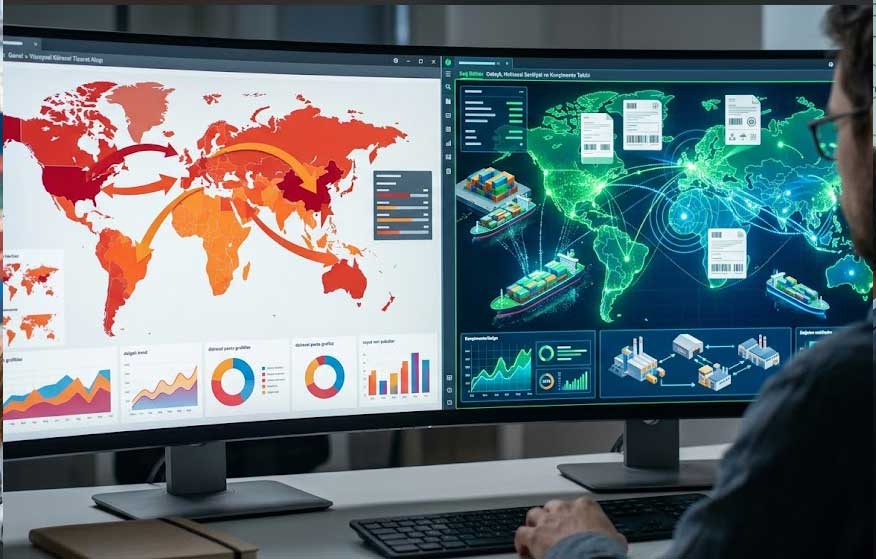

Staying competitive in global business comes down to access: the right information, fast and accurate. Business intelligence used to be a tool for large corporations with full analytics teams behind it. It is now a working requirement for small and medium-sized enterprises as well, given how quickly digital transformation and competitive pressure have closed the gap between asking the question and needing the answer. Companies without that capability now operate at a measurable disadvantage.
Why Business Intelligence Matters
Business intelligence is the practice of taking internal and external data and turning it into a decision-grade picture of where the company should head next. It surfaces opportunities earlier, flags risks before they become losses, and grounds marketing decisions in evidence.
Modern intelligence platforms run in real time. They combine macro and micro indicators, customer profiles, competitor activity, and sector trends in one place. The result is a stream of decisions based on what is happening in the market this quarter, not what happened two years ago.
Find Export Customers,
Analyze Your Markets
Export 5.0 surfaces buyers and suppliers in your target market in seconds, tracks trade flows with up-to-date data, and connects you to corporate contacts at importing companies. It gives exporters the digital backbone for strategic outreach.
Export 5.0 system
Business Intelligence on the Bilvio Export Platform
Bilvio.com/ihracat is one of the most advanced commercial intelligence platforms in Turkey. It pulls global trade data and analytical tools into one workspace. Companies running export and import operations get visibility into competitor activity, prospective buyers, and market shifts as those shifts are happening.
Core capabilities:
HS-code-based market and competitor analysis. Enter a product’s HS code and see who is buying, who is selling, and the demand picture at a global level.
Buyer and supplier directories. Reach prospective customers and suppliers along with their historical transaction footprint.
Statistical trade data. Five-year import and export trends per product, with enough resolution to size the market properly.
Competitor tracking. See exactly which products competitors are selling, and into which markets.
Targeted filtering. Narrow buyer and supplier lists to specific sectors, regions, or trading patterns in a few clicks.
Export 5.0 technology. Algorithmic processing and automation that compress analysis time without sacrificing accuracy.
What Digital Business Intelligence Delivers
Faster, cleaner decisions. Real-time data and automated reports keep teams reactive to market shifts instead of weeks behind them.
New market access. Product-level demand analysis identifies the markets where growth is real and worth investing in.
Competitive visibility. A clear read on which markets competitors dominate and which products they push.
Risk and opportunity. Early signals on regulatory changes, supply-chain shifts, and demand fluctuations.
Data-led marketing. Strategy built around target buyer profile, price ranges, and verified market size.
Less manual workload. Clean interfaces and automated reporting cut down on the spreadsheet hours.
A Strategic Approach to Business Intelligence
Getting full value from a commercial intelligence platform takes more than logging in. A few principles that work in practice:
Start with clear objectives. Decide which product is going into which market, and which criteria you will use to size up competitors, before opening the platform.
Use analytics and automation. Move away from hand-built spreadsheet reports and rely on the automated analysis built into intelligence platforms like Bilvio.
Iterate continuously. Review your product mix, sales targets, and strategy regularly against the new data the platform produces.
Share data internally. Push the same intelligence to sales and marketing, not just to management. Aligned teams move faster.
Track new platform features. Intelligence tools evolve quickly. Watching that release pipeline keeps your team a step ahead of slower competitors.