
The opening up of global trade keeps creating new windows for Turkish companies to put their products and services in front of buyers abroad. The hard part of converting that opportunity into a sustainable export book sits in one place: finding the right customers.
So how do you actually reach potential buyers and turn export interest into orders? What follows is a working playbook on customer-acquisition methods for companies entering or expanding in foreign markets.
It is written as a roadmap for teams running their first export cycle and for established exporters looking to grow share in a current market. Take the methods below, adapt them to your product and your sales motion, and your odds of finding qualified international buyers move sharply in your favor.
Find Export Customers,
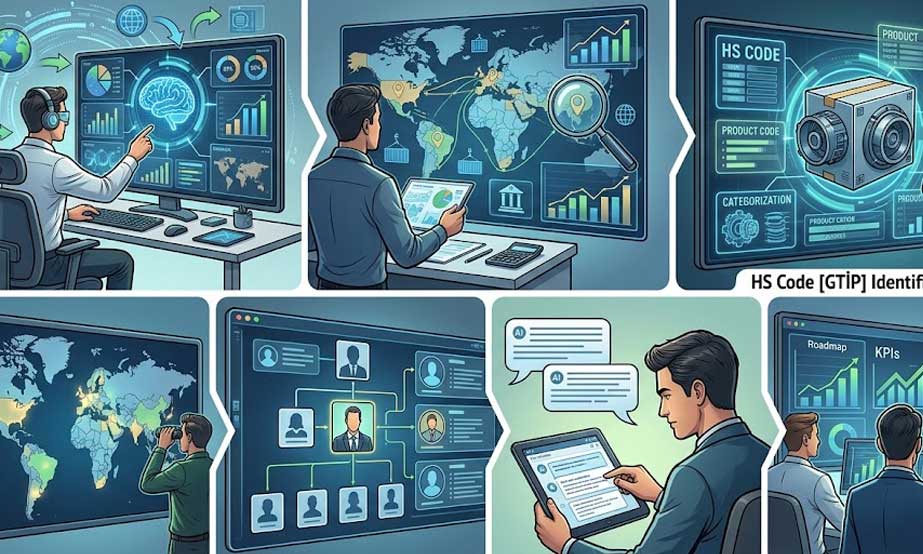
Analyze Your MarketsExport 5.0 surfaces real importers and suppliers in your target market in seconds, reads current trade flows, and routes you to the corporate contacts that matter. It is the operating layer for exporters who plan strategically rather than chase leads.
Export 5.0 System
The Strategic Foundation: Target Market Analysis
Before any outreach, define the strategy. Which market is the strongest fit for your product or service? Answering that requires a structured target market analysis covering:
Market size and potential: import volume of your product in the country, growth trajectory, and forward demand.
Competitive landscape: domestic and international competitors active in the market, their pricing, and their share.
Consumer behavior: purchasing habits, preferences, and cultural expectations in the target country.
Customs duties and legal procedures: applicable tariffs, import quotas, and the certifications your product needs to clear.
The Export 5.0 system on www.bilvio.com/ihracat, one of the leading export platforms across Turkey and Europe, is built for exactly this stage. Its trade-data backbone lets you size target markets, identify potential importers, and run competitor analysis in seconds. Platforms in this category give you the inputs you need to build an evidence-led market plan instead of one based on guesswork.
2. Use Digital Channels Properly
International trade now runs on digital infrastructure. Among the most measurable ways to reach potential customers are the standard digital playbooks, applied with discipline.
A professional website and SEO: a site in English plus the language of your target market, structured to present your products and company credibly. Investing in SEO (Search Engine Optimization) for visibility on Google and other engines pulls in inbound interest organically.
International B2B platforms: Business-to-Business (B2B) platforms like Alibaba, Kompass, and Europages connect buyers and sellers globally. A clean profile and consistent activity on these platforms generates direct purchase inquiries.
Social media and content marketing: professional networks like LinkedIn put you in front of decision-makers in your sector. Sharing technical content, product demos, and case stories builds visibility and trust over time.
Google Ads: geo-targeted Google Ads put your product in front of buyers in the specific countries you have prioritized. This channel can generate qualified leads at a measurable cost-per-lead.

The Role of Traditional Methods
Even with digitization, traditional channels still do real work, especially for the relationship side of long-term export deals.
International trade shows and trade missions: exhibiting at sector-specific trade shows is one of the most efficient ways to present your products, study competitors, and meet buyers in person. Trade missions and buyer-delegation programs run by the Ministry of Trade and the Exporters’ Associations open additional doors into new markets.
Commercial Attaché Offices and Consulates: Turkey’s diplomatic missions abroad will share lists of potential importers and current market intelligence in their host country, free of charge. You can route these requests through the “Consult an Attaché” system.
Exporters’ Associations and Chambers of Commerce: the associations and chambers you belong to support customer acquisition through their events, training programs, and networking introductions.