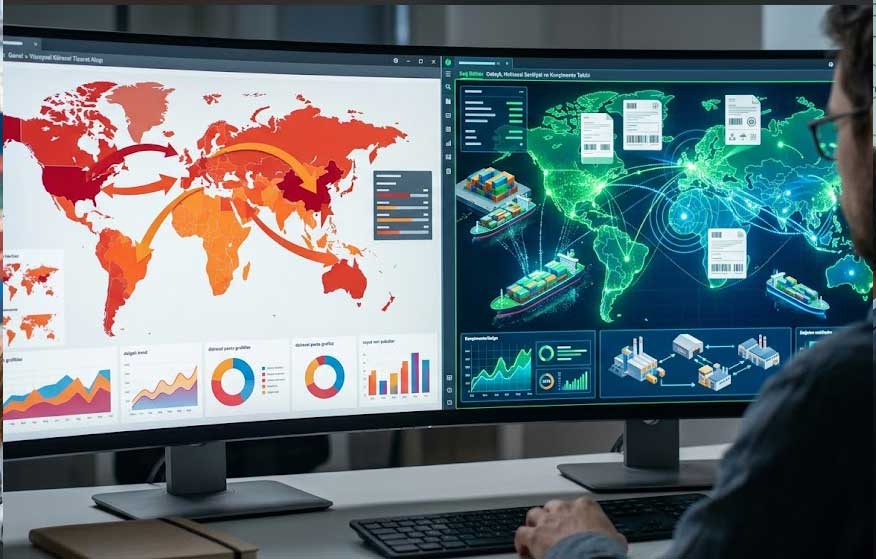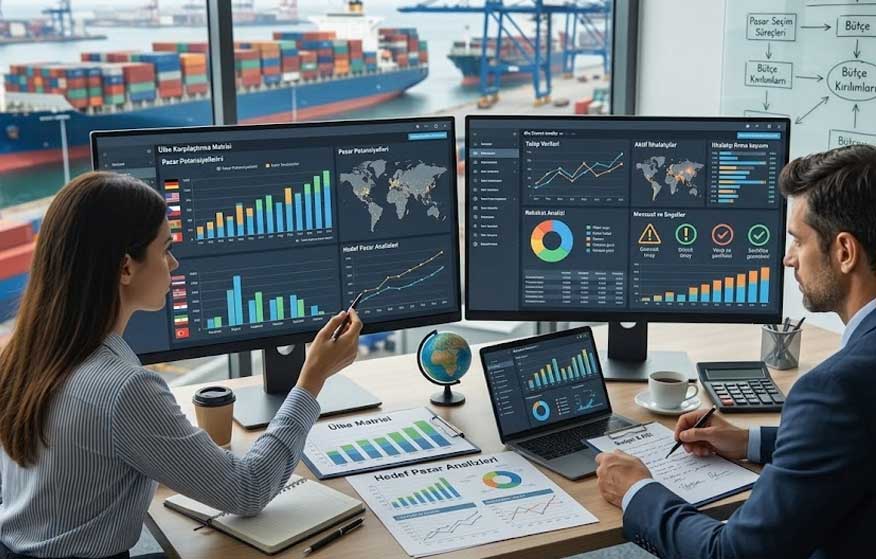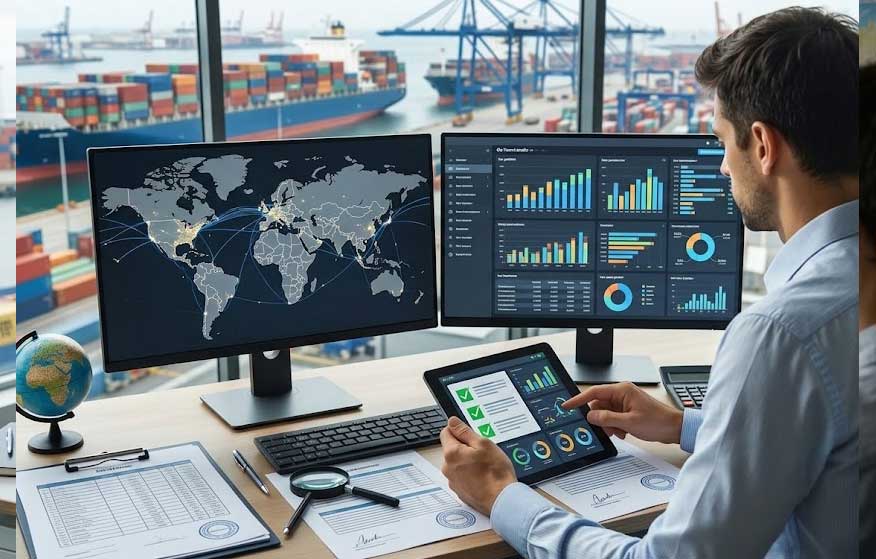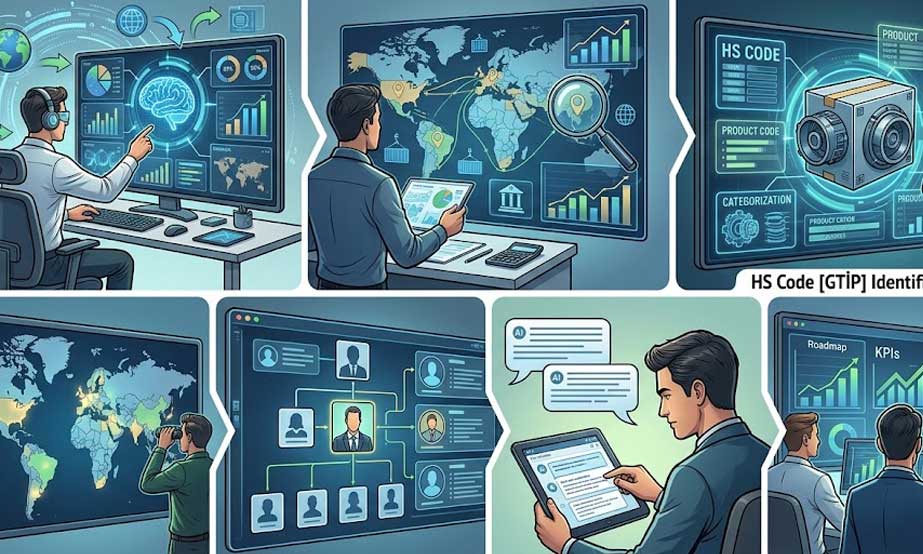

For export and import companies competing in global markets, strategic information, also called trade intelligence, is the real competitive edge. Not the product, not the price. Trade intelligence shows you what is happening today, what is likely to happen next, what your competitors are doing, and where the operational risk is sitting. Bilvio.com is the most developed trade-intelligence system in Turkey and Europe in this category.
The foreign-trade-intelligence modules we built in cooperation with our academic faculty give exporters a steady read on market demand, customs records, transport costs, and regulatory shifts, which is what decision-making rests on. The sections below explain what trade intelligence is, what a serious module needs to contain, the concrete benefits, and which roles should be trained on it.
Find Export Customers,
Analyze Your Markets
Export 5.0 surfaces buyers and suppliers in your target market within seconds, tracks trade trends with current data, and routes you to the corporate contacts at importing companies. It is the working layer behind a serious export operation.
Export 5.0 system
1. What Is Foreign Trade Intelligence, and What Should It Cover?
Foreign trade intelligence lets companies in the import and export business decide based on data, information, and analysis. It answers the easy questions, such as “How much does each country import,” and the harder ones: which shipping route comes in cheaper, what is changing in the regulations, who else is selling into the same market, where customs duties are likely to rise.
A working foreign-trade-intelligence module needs the following pieces:
| Module | Sample Content | What It Lets You Do |
|---|---|---|
| Market Data and Trend Analysis | Import and export values by country, product-level breakdowns, regions where demand is rising or falling. | Open new markets, plan product variants. |
| Competitor Analysis | Other countries exporting the same product, price and freight comparisons, the quality-versus-price balance. | Set pricing strategy, hold position on quality. |
| Regulatory Monitoring & Compliance | Customs tariffs, tax rules, free trade agreements (FTAs), import and export permits. | Avoid surprise fees, capture available preferences. |
| Supply Chain & Logistics Knowledge | Freight costs, shipping routes, port and carrier performance, storage costs. | Bring cost down, tighten delivery windows. |
| HS Code & Product Classification Analysis | Picking the right HS code, tax effects of subcategory choice, applicable tariffs and measures. | Cut customs delays, plan landed cost. |
| Risk and Adaptability | FX exposure, supply-chain disruptions, the political and economic state of the trading partner. | Prepare for crises, plan alternative markets and supply chains. |
2. What Foreign Trade Intelligence Actually Delivers
The concrete benefits of training a team on foreign trade intelligence and putting the supporting software in place break down as follows:
Finding New Market Opportunities. The data shows where demand for your product category is growing and where the competitive set is still thin. On TradeInt, for example, you can pull import-volume trends by HS code and see which countries are buying more of your product this quarter than last.
Cost and Time Savings. When logistics routes, freight rates, and transit times are mapped against real records, your quote stops being a guess. The cost line in a competitive bid stays predictable, and surprise charges drop out.
Risk and Compliance Control. The risk of delays or penalties from a missed regulatory change, a shifted tariff, or an FTA the team did not catch goes down once monitoring is part of the process.
Competitor Read. Watching the performance, pricing posture, and target markets of companies exporting the same products gives you a real basis to set your own strategy against, not a hunch.
Confident Strategic Decisions. Choices on widening the catalog, opening a new market, or changing pricing all become defensible because the data sits behind them.