
Most export sales managers can name every method for finding international customers in under a minute: trade fairs, marketplaces, LinkedIn, referrals, maybe a distributor. What almost none of them can tell you, without checking, is which of those methods actually produced their last five closed deals. That gap between the methods companies use and the methods that work is where export marketing budgets quietly leak. Having spent years working with customs and bill-of-lading data at Bilvio, watching which shipment records actually turn into closed export deals versus which ones sit in a spreadsheet unread, I can say with some confidence that the exporters getting real traction are not necessarily using more channels than everyone else. They are sequencing the same channels differently, starting from evidence of demand rather than a hunch, and treating buyer discovery as a research problem before it becomes an outreach problem. This article walks through the methods that matter, in the order that actually produces results.
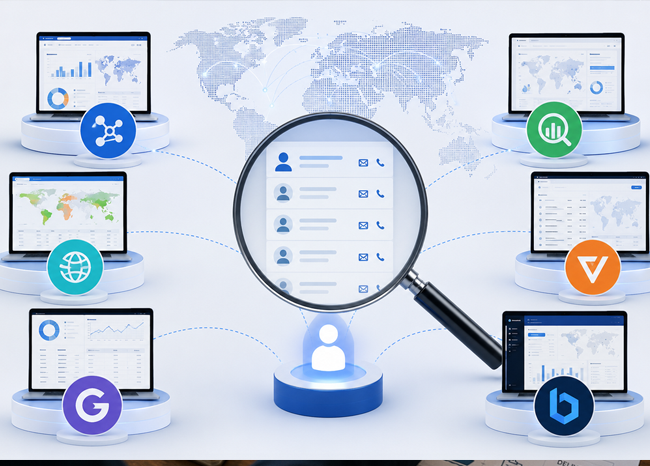
Export 5.0 identifies buyers and suppliers in your target market within seconds, analyzes trade trends and your target markets with up-to-date data, and enables you to reach corporate contacts of companies. It offers a powerful digital infrastructure for strategic marketing.
What Finding International Customers Actually Involves
Before comparing channels, it helps to separate two different jobs that get lumped together under “finding customers.” The first is demand validation: confirming that a market imports meaningful volume of your product category and that volume is stable or growing. The second is buyer identification: pinpointing the specific companies in that market worth approaching. Most export marketing advice skips straight to channel tactics (attend this fair, run this ad, join this marketplace) without addressing either of these first, which is why so much outreach lands on the wrong audience regardless of how well the message is written.
SMEs face a real, measurable disadvantage here. A 10 percent increase in regulatory or procedural trade obstacles reduces export value by 1.6 percent for large firms but by 3.2 percent for small firms, according to research published by the International Trade Centre, roughly double the impact, because smaller firms have fewer resources to absorb the cost of navigating unfamiliar markets and compliance requirements. That gap is exactly why the sequencing of demand validation before buyer identification before outreach matters more for an SME than for a company with a dedicated market research team to fall back on.
Trade Fairs and In-Person Networking
Trade fairs remain a legitimate method, particularly for product categories where buyers want to physically inspect goods, sample materials, or negotiate face to face before a first order (textiles, furniture, specialty food products with taste or texture requirements). Sector-specific fairs like Texworld for apparel or Anuga for food and beverage put an exporter in front of a concentrated, self-selected audience of active buyers in a short window.
The mistake most companies make is treating fair attendance as the whole strategy rather than one channel fed by prior research. A company that walks into a fair having already identified, through shipment records, which attending companies have recently imported similar products can approach specific booths with a reason, rather than distributing brochures to everyone who walks past. Fair ROI improves substantially when the target list exists before the flight is booked, not after.
Digital Marketing, SEO, and Online Marketplaces
A company’s website and search visibility function as a passive discovery channel: buyers researching potential suppliers, which happens well before they make direct contact in most B2B purchasing processes, will find or fail to find a company based on how well its site addresses export-specific questions (which countries it ships to, what certifications it holds, typical order volumes and lead times). Generic product copy translated into English underperforms content that answers these specific buyer questions directly.
Marketplaces (Alibaba, Global Sources, Made in China, IndiaMART depending on region) generate inbound RFQ volume without active outreach, which suits commodity and semi-commodity categories where price competitiveness matters more than differentiated positioning. The trade-off is margin compression, since marketplace search ranking tends to reward the lowest quoted price. For differentiated products, marketplaces work better as a secondary visibility channel than a primary lead source.
Government Trade Promotion Programs and Trade Missions
National and regional export promotion agencies (Turkey’s Trade Ministry-affiliated programs, Germany’s GTAI, the UK’s Department for Business and Trade, USAID-backed programs in various developing markets) run trade missions, matchmaking events, and market entry subsidies that reduce the cost of testing a new market. These programs are underused by SME exporters, often because the application process feels bureaucratic relative to the perceived payoff, but the actual cost of a subsidized trade mission is frequently a fraction of an equivalent self-funded market entry effort.
The limitation is scale and specificity: government-organized matchmaking events typically connect an exporter with a handful of pre-screened buyers rather than the full universe of active importers in a category, so this method works best as a relationship-building supplement rather than the primary source of a buyer pipeline.
Distributor, Agent, and Chamber of Commerce Networks
In markets with import licensing requirements or established local buying norms, a distributor or agent relationship often outperforms direct sales, particularly across much of the Middle East and Latin America where end buyers are accustomed to sourcing through established local intermediaries. Bilateral chambers of commerce (the Turkish-German Chamber of Commerce, for instance, or similar bodies pairing most major trading partners) maintain member directories and host networking events that can surface distributor candidates faster than cold search.
The risk with this method is exclusivity terms locked in too early. A distributor agreement signed before an exporter has independently confirmed the actual size and shape of demand in that market can hand away control of a market’s most active buyers before the exporter fully understands who they are.
Direct Outreach Using Customs and Bill-of-Lading Data
This is the method most export marketing guides underweight, and it deserves more attention than it typically gets. Customs declarations and bill-of-lading filings generate a public or licensable record every time a shipment crosses a border, and that record includes, depending on the country, the importing company, the product classification, the volume, and often the current supplier. Searching this data by HS code and destination market turns “who might buy this” into a specific list of companies that have already proven, through an actual transaction, that they buy this product category and at what approximate frequency.
This is the layer where a platform like Bilvio’s buyer discovery tools fits directly into the research phase most exporters currently skip or handle manually: rather than compiling a target list from a directory or guessing based on market size, an exporter can search confirmed recent importers of a given HS code in a target country, see shipment frequency and approximate volume, and prioritize outreach toward buyers showing consistent, recent activity. The same underlying data supports [competitor shipment tracking](INTERNAL: competitor shipment tracking tool), which shows which buyers a named competitor currently supplies and at what volume, turning a cold market into a mapped one before the first email goes out.
The limitation worth naming honestly: this method tells you who is buying, not why they chose their current supplier or how open they are to switching. It replaces guesswork in targeting, not the judgment required in the actual sales conversation that follows.
Referrals and Existing Customer Relationships
The cheapest and highest-converting source of new international customers is usually the one companies invest in least deliberately: referrals from existing buyers. A satisfied importer in Poland often has direct knowledge of who else in their sector, or in a neighboring market, is actively sourcing a similar product, and a specific, direct ask for an introduction converts at a meaningfully higher rate than cold outreach because it carries a built-in trust signal.
This channel scales slowly and depends entirely on having existing customers worth asking, which makes it a compounding asset rather than a starting point. Companies in their first year or two of export activity will not have much of this to draw on yet, but building the habit of asking for introductions after every successful shipment pays off increasingly as the customer base grows.
Combining Methods Into a Working Pipeline
No single method above is sufficient on its own, and treating one as the whole strategy is the most common mistake exporters make. A workable setup for a mid-market exporter typically layers three things: a digital presence (website plus marketplace or directory listing) for passive inbound capture, one or two relationship channels (a distributor in a complex regulatory market, chamber of commerce networking, or subsidized trade missions) for markets where local presence matters, and active outbound targeting confirmed importers identified through [customs-data buyer discovery](INTERNAL: HS code and target market buyer identification) for markets where the exporter wants to build direct relationships at scale.
The sequencing matters more than the count of channels used. Demand validation (does this market import meaningful volume of my product) should come before buyer identification (which specific companies are buying it), which should come before channel selection (how do I actually reach them). Companies that reverse this order, picking a channel first and hoping the right buyers show up, spend more to acquire each customer and convert at a lower rate than companies that start from evidence.
Frequently Asked Questions
What is the fastest way to find international customers for a new export product?
Start with demand validation using country-level import data by HS code to confirm a market imports meaningful volume, then move to buyer-specific research using customs or bill-of-lading records to identify companies with recent, confirmed import activity in that category. This produces a workable outreach list faster than trade fair attendance or marketplace listing alone.
Are online marketplaces still worth using in 2026?
Yes, particularly for commodity and semi-commodity products where inbound volume and price competitiveness matter more than differentiated positioning. For higher-margin, differentiated products, marketplaces work better as a secondary visibility channel than a primary lead source, since their search ranking tends to reward the lowest price.
How do I find buyers without attending trade fairs?
Customs and bill-of-lading records show which companies have imported your product category into a target market recently, along with shipment frequency and approximate volume. Searching this data by HS code and destination country identifies confirmed, active buyers without requiring travel or event attendance.
Should I use a distributor or sell directly to international buyers?
It depends on the market’s regulatory complexity and local buying habits. Markets with import licensing requirements or established distribution norms generally favor a distributor relationship. Markets where end buyers commonly import directly favor a direct sales approach, particularly once demand has been validated with actual shipment data.
How important are referrals compared to active outreach?
Referrals convert at a higher rate than cold outreach because they carry an existing trust signal, but they depend on having a base of satisfied customers to draw from, which limits their usefulness for new exporters. Established exporters should systematically ask for introductions after successful shipments rather than treating referrals as incidental.
Do government trade promotion programs actually help find customers?
They can, particularly for reducing the cost of testing a new market through subsidized trade missions and matchmaking events. Their limitation is scale: these programs typically connect exporters with a small number of pre-screened buyers rather than the full universe of active importers, so they work best alongside other methods rather than as the sole source of a pipeline.
Finding international customers is less about the number of channels a company runs and more about the order in which it runs them. Confirm demand before choosing a market, identify the companies already buying before spending on outreach, and treat trade fairs, marketplaces, and distributor relationships as channels that convert better once they are aimed at a validated audience rather than a guess.