
Finding foreign customers is the most critical step in exporting, and the one most teams keep postponing. The product quality is there, the capacity is there, the price is competitive. The right buyer is missing. Or worse: time and money were spent on the wrong buyer, and the deal collapsed.
After more than ten years in international trade, one thing is clear to me: finding customers abroad is a question of knowledge, not luck. Companies that know the right market, the right buyer profile, and the right communication channel keep adding customers, often without a trade-show budget. Companies that don’t stay stuck, even when they have the better product.
This guide covers the methods for finding foreign customers that actually work in 2026, the mistakes worth avoiding, and the data-driven approach replacing the older playbook. At the end, I’ll mention a practical tool Turkish exporters can use for market analysis and buyer identification.
Find Export Customers,
Analyze Your Markets
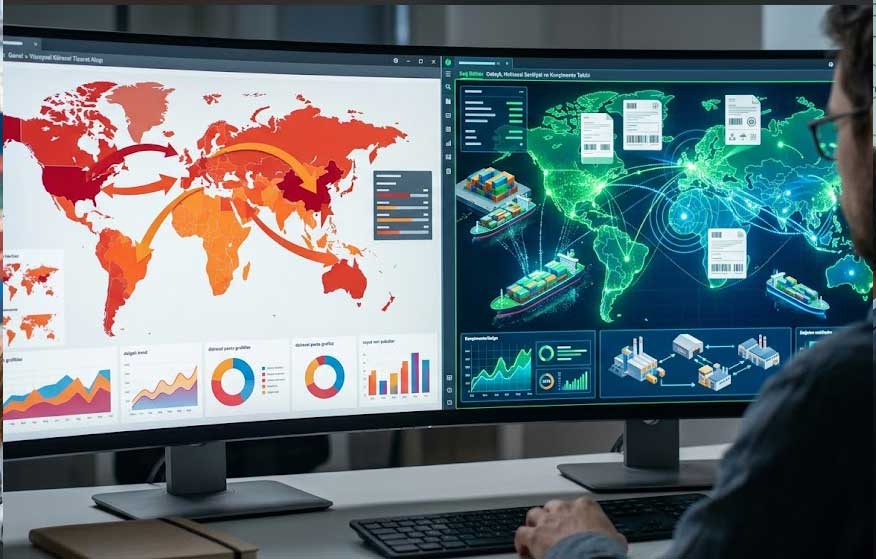
Export 5.0 surfaces real importers and suppliers in your target market in seconds, reads current trade flows, and routes you to the corporate contacts that matter. It is the operating layer for exporters who work from data instead of chasing leads.
Export 5.0 system
Why Traditional Methods No Longer Carry the Whole Load
Trade shows, cold email blasts, chamber-of-commerce lists. All of these still have value, but on their own, they fall short. Here is why:
- Trade-show participation costs keep climbing while conversion keeps falling. Even at major shows, the share of meetings that turn into real customers sits below 5 to 10 percent.
- Generic email campaigns get flagged as spam. Reply rates have dropped to 1 to 2 percent.
- B2B platforms (Alibaba, Kompass, and similar) are saturated with suppliers, so the fight collapses into price competition.
Targeted outreach based on actual importer data converts 5 to 10 times better. The reason is simple: you know exactly who you are reaching. You are not contacting strangers, you are presenting an offer to a company that has already bought the product.
7 Essential Methods for Finding International Customers
1. Identifying Target Buyers Using HS Code and Bill of Lading Data
This method has become one of the most powerful tools in international trade over the past three or four years. The logic is simple: every sea shipment generates a bill of lading. In many countries those documents are public. The data shows who bought which product, when, and from whom. www.bilvio.com is building Europe’s most advanced platform of this kind from a technology park in Turkey.
When you query by HS code, you can see:
- Companies that import that product on a regular basis
- Their current suppliers and how often they buy
- Which markets are growing and which are shrinking
- Which countries competing Turkish exporters sell into
2. Finding Decision-Makers on LinkedIn
LinkedIn is one of the most underrated tools in B2B international trade. It puts you directly in front of purchasing managers, import managers, and distributors, and it costs nothing.
Do this: filter your profile search by job titles like “import manager,” “purchasing director,” or “supply chain,” plus the target country and industry. Send an InMail or a personalized connection request to people outside your first-degree network. Skip generic openers like “We’d like to introduce our products.” Those get ignored on sight.
Bilvio’s export marketing system helps you identify the right decision-makers and run email outreach to them. https://bilvio.com/tr/ihracat-pazarlama-sistemi/
3. B2B Platforms, Used Properly
Alibaba, Kompass, Europages, Global Sources, TradeKey. These platforms work, but only when you use them right. The wrong way is to set up a profile and wait. The right way is to search for buyers and proactively send offers.
Sign up as a supplier
- Build a detailed product page
- Upload certifications and quality documents
- Keep response times under 24 hours
- Lead with value, not price
Search for buyers
- Filter the buyer lists
- Watch for companies posting RFQs (requests for quotes)
- Focus on accounts active in the last 30 days
- Send a personalized message
4. Target-Country Customs Databases
The United States, India, Brazil, and Mexico publicly publish import data. The records show the actual buying companies, what they buy, and who supplies them. You can use these lists directly to build a target-customer list.
The strength of this approach: you are not approaching a stranger. You are approaching a company that has already bought the product. Buying intent is proven, the demand is real, the only open question is whether they will switch suppliers.
5. Trade Attachés and Sector Chambers
Turkey’s trade attaché offices and advisory bureaus abroad are an underused resource. On request, they will share sector-specific buyer lists for the target country. The service is free, reliable, and locally informed. TIM’s market research support fits the same role.
6. Pulling in Customers Through Content Marketing and SEO
Importers now search for suppliers on Google. If your English product page is missing or your SEO is weak, they will not find you. This is the most scalable way to attract passive buyers.
Think about it. Showing up on Google for a query like “steel pipe manufacturer Turkey” or “textile supplier Istanbul” can mean hundreds of qualified leads a month. One-time investment, long-term return.
7. Trade Shows, but Strategically
Are trade shows dead? No. The “set up a booth and wait” approach is dead. Get the attendee list before the show, book meetings with target customers, and use the show itself as a closing meeting. An unprepared trade show is a cost. A prepared one is an investment.
Methods Compared: Which One Fits Which Situation
| Method | Cost | Time to Results | Target Market | Effectiveness |
|---|---|---|---|---|
| HS Code / Bill of Lading Analysis | Medium | 1–4 weeks | Global | Very High |
| LinkedIn outreach | Low | 2–8 weeks | Global | High |
| B2B platforms (passive) | Medium | 1–6 months | Asia, Global | Medium |
| Customs database search | Medium | 2–6 weeks | Global | High |
| Content Marketing / SEO | Medium | 3–12 months | Global | Very High |
| Commercial attaché offices | Low | 4–12 weeks | Specific countries | Variable |
| Strategic trade-show participation | High | 1–3 months post-show | By industry | Medium to High |
The 5 Most Common Mistakes When Looking for International Customers
- 1. Sending the same message to everyone. Pitching machine exports to a textile company is a typical case. Without segmentation, conversion collapses.
- 2. Expecting a sale from the first contact. In B2B export, the path from first message to closed deal usually takes 7 to 12 touchpoints. Teams without a follow-up system give up too early.
- 3. Targeting the wrong market. The exporter who says “everyone is my customer” sells to no one. A data-driven focus on two or three countries beats a scattered global push every time.
- 4. Ignoring weak English communication. Product decks, website copy, email exchanges. Any rough edge in these gets you eliminated before you ever get to prove the product.
- 5. Trying to compete on price alone. The strategy may pull customers in the short term, but it does not last. Value-based positioning is more profitable, every time.
From First Contact to Sale: The Right Outreach Sequence
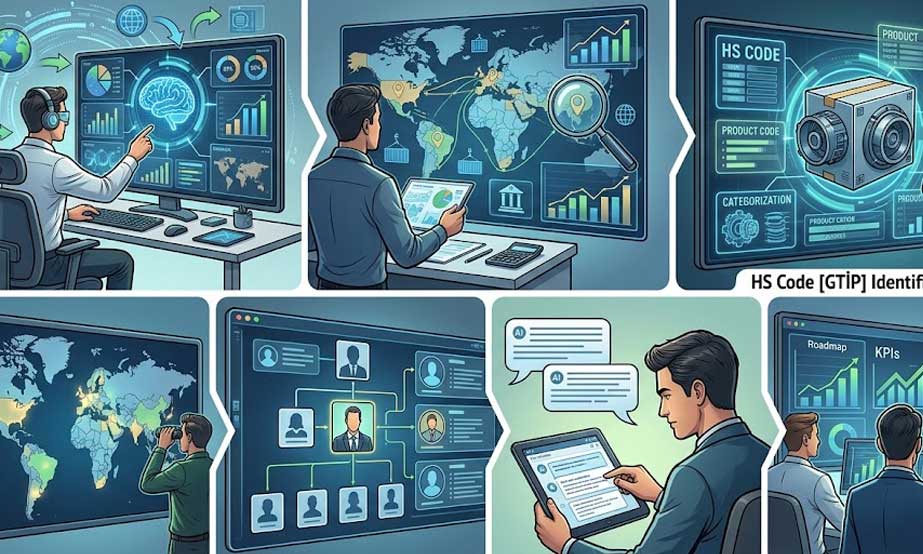
Finding international customers is a process, not a single action. The most effective sequence looks like this:
- Build a target-company list using HS codes or bill-of-lading data (20 to 50 companies)
- Identify the decision-maker at each company (LinkedIn, company website, data platforms)
- Write a personalized first message focused on the value proposition, not on the product
- Send a follow-up within 7 to 10 days
- Send samples or detailed quotes to the companies that engage
- Log every touchpoint in the CRM
Digital Visibility: Make Sure Buyers Can Find You
Finding customers is not only about outreach. Importers also look for suppliers, and they do it on Google. Ask yourself one question: can a German buyer searching for my product find me?
If the answer is no, here is the fix:
- Publish an English product page and company profile
- Identify the search terms used in the target market (“manufacturer,” “supplier,” “exporter”)
- List the company on Google Business Profile and relevant industry directories
- Publish English-language content on a regular cadence, both for SEO and for trust