
If you’ve been in manufacturing or trade for more than a few years, you already know that the domestic market alone won’t sustain ambitious growth. Export marketing is what bridges the gap between a good product and a thriving global business — and yet, it’s the area where most companies either give up too early or invest in the wrong direction. I’ve worked in international trade for over a decade, and in this guide, I’m sharing what genuinely works.
What Is Export Marketing — and Why Does It Differ From Domestic Marketing?
Export marketing is the strategic process of promoting and selling your products or services to buyers in foreign markets. Sounds straightforward, but the critical difference is context: buyer behavior, trust signals, competitive benchmarks, and even the concept of ‘quality’ shift dramatically depending on the target country. A pitch that converts buyers in Germany will fall flat in Brazil.
The core pillars of export marketing include market selection, positioning, digital visibility, and lead generation. Miss any of these, and the others won’t compensate.
Export 5.0 identifies buyers and suppliers in your target market within seconds, analyzes trade trends and your target markets with up-to-date data, and enables you to reach corporate contacts of companies. It offers a powerful digital infrastructure for strategic marketing.
Choosing the Right Export Markets: Data First, Assumptions Never
One of the most expensive mistakes exporters make is entering a market based on gut feeling or because a competitor is there. Before you spend a euro on trade fairs or website localization, build a data-driven market profile.
Here’s a practical framework I use with clients:
- Volume analysis: How much does the target country import of your product category (HS code level)?
- Competition density: How many suppliers are active? Are they local or foreign?
- Buyer profile: Who are the actual importers — wholesalers, retail chains, manufacturers?
- Regulatory environment: Tariffs, certifications, labeling rules
- Payment and credit risk: Country risk score, common payment terms
| Market Factor | Tool / Source | Why It Matters |
| Import volume | Trade statistics / HS code data | Confirms real demand exists |
| Active buyers | Customs & bill of lading data | Names the actual decision-makers |
| Price benchmarks | Unit value analysis | Positions your offer competitively |
| Competition | Supplier country analysis | Identifies gaps and threats |
| Market growth rate | Year-on-year import trend | Prioritizes high-potential markets |
For this kind of buyer-level data, Bilvio is one of the most complete platforms I’ve come across — it aggregates customs and bill-of-lading data from 225+ countries, letting you see exactly which companies are importing your product category right now, in real time. It’s the kind of intelligence that used to require expensive trade research firms.
Building Your Export Marketing Strategy
Positioning for Foreign Buyers
Your domestic USP may not resonate abroad. A Turkish manufacturer positioning on ‘best price’ will struggle in Germany, where quality certification and reliability dominate buyer decisions. Audit your positioning for each target market.
Digital Presence as the First Impression
Here’s a reality check: 82% of international B2B buyers research suppliers online before reaching out. If your website loads slowly, lacks an English version, or doesn’t clearly state your export capabilities, you are invisible to most of your potential buyers.
Minimum viable export web presence:
- Professional English (and ideally local language) product pages
- Clear contact and inquiry form optimized for international time zones
- Certifications, standards, and MOQ/lead time information visible
- Country-specific landing pages if targeting multiple markets
Content and SEO for Export Markets
Publishing content in your target market’s language, around the search terms your buyers actually use, is one of the highest-ROI investments in export marketing. A well-ranked article answering ‘best textile supplier Turkey’ in German can generate qualified leads for years.
Common Export Marketing Mistakes (That I See Every Year)
- Attending trade fairs without pre-scheduling meetings — you waste the budget on booth costs and come back with a pile of business cards that go nowhere
- Sending the same product catalog to every market without adapting specs, certifications, or pricing
- Neglecting follow-up: most export deals close after 5–12 touchpoints, not one email
- Ignoring buyer financial health — always check the importer’s trade history and payment record before committing to large orders
The Role of Trade Data in Modern Export Marketing
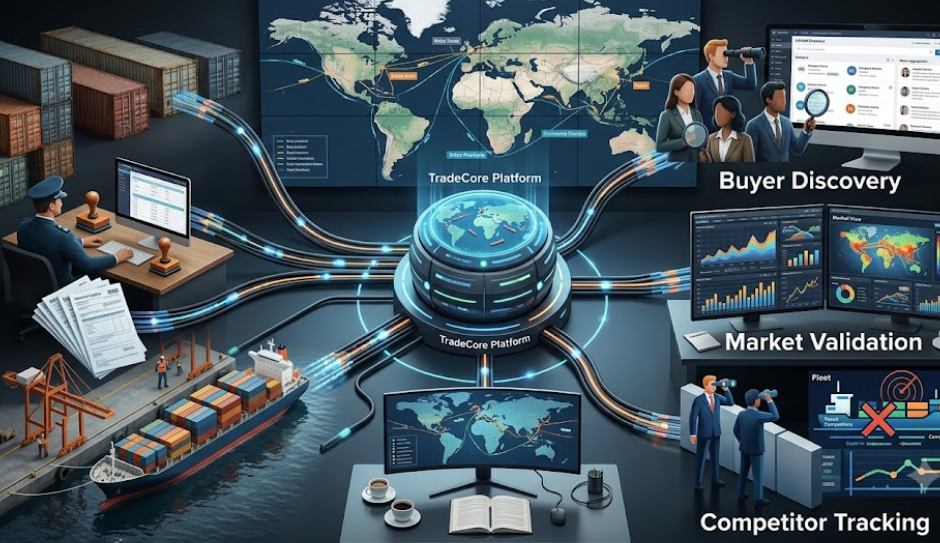
The shift from relationship-based to data-driven export marketing is real and accelerating. Platforms that surface actual import transaction data — who is buying what, how much, and from which country — have fundamentally changed how competitive exporters operate.
If you haven’t already explored Bilvio’s export platform, it’s worth a look. It specifically helps Turkish exporters identify verified foreign buyers by analyzing customs data, meaning you’re reaching out to companies that have already proven they buy in your product category — not cold-prospect guessing.
Frequently Asked Questions
Q: What’s the difference between export marketing and international marketing?
A: Export marketing focuses on promoting products to foreign buyers from your home country. International marketing is broader — it may include local production, joint ventures, or full market localization strategies.
Q: How long does it take to see results from export marketing?
A: Realistically, 6–18 months for the first meaningful orders if you’re starting from scratch. Data-driven outreach to verified buyers can shorten this significantly.
Q: Do I need a dedicated export marketing team?
A: Not necessarily at the start. One experienced person with clear processes and the right digital tools can manage market entry effectively.
Q: What budget should I allocate to export marketing?
A: A common benchmark is 3–5% of target export revenue. Redirect budget from trade fairs toward digital tools and targeted outreach for better ROI.