For international exporters relying on traditional trade show booths, outdated static business directories, or unverified mass email lists, expanding into global markets is becoming increasingly inefficient. In today’s data-driven trade ecosystem, success is no longer about reaching out to random prospects—it is about leveraging accurate trade data to identify real, active buyers in your target market and reaching out directly to key decision-makers.
In this guide, we bypass superficial advice and explore how to use global customs records, Bill of Lading (B/L) data, and advanced trade intelligence to pinpoint verified B2B importers worldwide.
Find Export Customers with AI
Analyze billions of trade data points in seconds to identify the global markets and potential customers that are right for you. Grow your export business with AI.

1. Why Traditional Export Marketing Channels Are Stagnating
For decades, B2B exporters have relied on conventional methods to find buyers overseas. However, these legacy channels present significant operational bottlenecks:
Trade Show Visitor Lists: Attendees at international trade fairs are often in passive research phases or already bound to established suppliers. Moreover, the high cost of booth rentals and travel yields a low return on investment (ROI).
Generic B2B Marketplaces: Product inquiry boards on generic B2B portals often feature outdated requests. Additionally, when hundreds of suppliers compete simultaneously for the same public RFQ, price wars quickly erode profit margins.
Purchased Static Databases: Purchased contact lists rarely reflect real-time purchasing behavior. They typically contain generic
info@orsales@email addresses that get blocked by gatekeepers or land directly in spam folders.
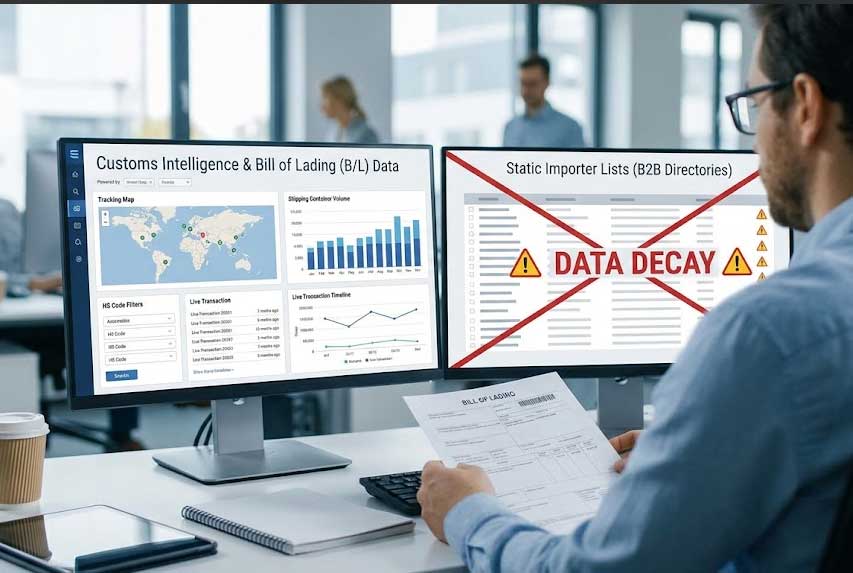
To build a scalable export pipeline, exporters must shift from passive directories to auditing real-time transactional trade data.
2. Demystifying the Bill of Lading (B/L) for Buyer Discovery
The most reliable evidence that a foreign company is an active buyer—rather than a passive prospect—is a verified shipping manifest or Bill of Lading (B/L) document. A Bill of Lading serves as the official legal contract between a cargo shipper and a carrier.
2.1 Analyzing Shipper, Consignee, and Notify Party Fields
When examining raw ocean freight manifest records, three core fields provide critical market intelligence:
Shipper (Exporter): The entity dispatching the goods (often your direct competitors).
Consignee (Importer): The party receiving the shipment (the actual buyer).
Notify Party: The party designated to be notified upon the cargo’s arrival at the destination port.
2.2 Identifying ‘Active’ Buyers via Shipment Frequency & Volume
By analyzing customs manifest datasets over a 12-month rolling window, you can filter prospective buyers based on concrete criteria:
Shipment Volume: Assessing whether a prospect imports container-load quantities suitable for your production capacity.
Order Regularity: Distinguishing between a company that imported once two years ago and an active buyer receiving regular monthly shipments.
Supplier Concentration: Evaluating whether a buyer relies on a single exclusive supplier or diversifies across multiple global vendors.
3. The Big Trap in Raw Customs Data: Filtering Out Logistics Intermediaries (NVOCCs)
One of the most common mistakes sales teams make when working with raw customs records is assuming that every entity listed in the Consignee field is an end-user or stocking distributor.
In international ocean freight, the listed consignee is frequently a freight forwarder, customs broker, or NVOCC (Non-Vessel Operating Common Carrier) acting on behalf of the real importer. Contacting these logistics brokers results in wasted outreach effort, as they do not buy or sell physical products.
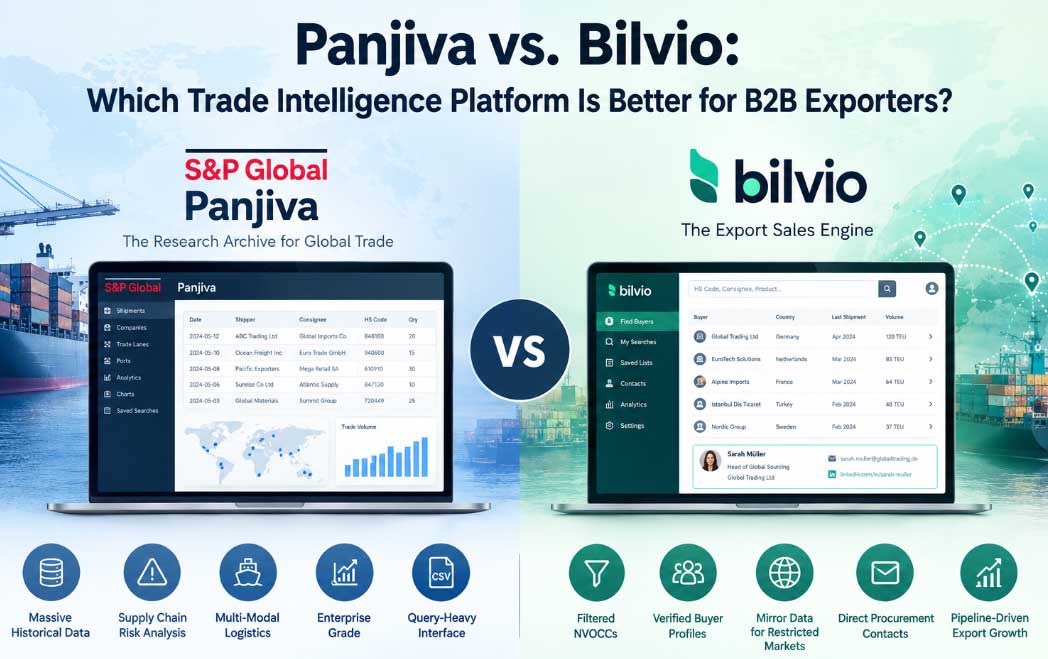
Key Takeaway: Modern trade intelligence platforms utilize AI-driven filtering algorithms (NVOCC Filtering) to strip away logistics intermediaries. This isolates true end-importers, manufacturing plants, and stocking distributors from freight handling agents.
4. Mapping Global Demand with 6-Digit HS Codes
Before reaching out to individual buyers, exporters must map global demand trends to prioritize high-potential target countries.
Identify Your 6-Digit HS Code: Determine the universal 6-digit Harmonized System (HS) code for your product line.
Analyze Trade Flows: Use trade platforms and statistics (such as ITC Trade Map or UN Comtrade) to evaluate global import growth, tariff structures, and unit values.
Apply Mirror Data Methodology: If a target market does not publicly publish its import manifests, apply Mirror Data analysis. By examining the export manifests of major supplying countries shipping into that destination, you can accurately map the target market’s import volume and key players.
5. From Data to Deal: Contacting Verified Purchasing Decision-Makers
Once you have identified an active importing company from shipping records, the next step is locating the right person within the organization.
Bypass Gatekeepers: Avoid sending commercial proposals to generic email addresses.
Target Executive Roles: Identify key decision-makers on professional networks such as LinkedIn, targeting titles like Procurement Manager, Global Sourcing Director, Supply Chain Vice President, or Category Buyer.
B2B Lead Enrichment: Match company names extracted from customs documents with validated corporate email formats and verified LinkedIn profiles.
Strategic B2B Cold Outreach Framework
When contacting procurement executives, keep your initial outreach concise, professional, and value-driven:
Personalized Subject Line: Keep it specific and free of promotional jargon (e.g., “Supply chain inquiry regarding [Product Category] for [Company Name]”).
Relevant Context: Demonstrate familiarity with their industry footprint without sounding intrusive.
Clear Value Proposition: Emphasize 1–2 key advantages, such as lead time reliability, cost efficiency, or quality certifications.
Low-Friction Call to Action (CTA): Request a brief, 5-minute introductory call rather than pushing for an immediate sale.
6. Leveraging Government Grants for Trade Intelligence Tools
Adopting professional trade intelligence software and real-time customs database subscriptions is an investment that yields high commercial returns. In many countries, trade support frameworks assist exporters in acquiring these technologies.
For instance, under the Ministry of Trade Export Support Decree No. 5973 in Türkiye, certified trade intelligence platforms and database subscription fees are eligible for 60% to 70% government grant reimbursements. Taking advantage of these subsidies allows manufacturing SMEs to establish enterprise-grade export research capabilities at a fraction of the cost.
Frequently Asked Questions (FAQ)
Is it legal to analyze global Bill of Lading records for B2B sales?
Yes. Ocean freight bills of lading and shipping manifests are public trade records in many jurisdictions worldwide. Analyzing these records for market research and B2B trade intelligence is a standard global business practice.
Is every company listed as a ‘Consignee’ on a shipping manifest a potential customer?
No. A significant portion of raw consignee entries are freight forwarders, logistics providers, or customs clearing agents. Using automated algorithms to filter out NVOCCs is essential to isolate real buyers.
Why is a 6-digit HS Code necessary for customs research?
Product descriptions vary across languages and regional terminology. The 6-digit HS Code is the global standardized classification system used by customs authorities worldwide, ensuring accurate product tracking across international borders.