For a manufacturer, merchant, or entrepreneur based in Turkey, entering cross-border markets to generate foreign-currency revenue is not an impenetrable bureaucratic maze. Rather, it is a 7-step methodological process that spans legal entity formation, accurate Harmonised System (HS Code / GTİP) classification, delivery terms (Incoterms 2020), secure payment structures, and proactive buyer discovery based on customs bill-of-lading data.
While traditional trade-fair participation and passive market-waiting strategies rapidly deplete working capital through escalating overheads, the modern international trade ecosystem operates across two distinct pillars: parcel-based micro-exports (Electronic Commerce Customs Declaration / ETGB – up to 300 kg / €15,000) and container/trailer-scale standard exports (Customs Declaration / GÇB). The cornerstone of a profitable export operation lies not in desk-bound guesswork, but in deploying commercial intelligence derived from physical container tracking to approach active importers directly.
Bu noktada birçok firma, pazar araştırması ve müşteri bulma tarafında ciddi zaman kaybediyor. Özellikle hedef ülke analizi, ithalatçı firma araştırması ve rakip incelemesi için profesyonel veri kullanmak gerekiyor. Bu nedenle birçok işletmeye, ihracat süreçlerinde veri odaklı çalışan Bilvio İhracat Platformu gibi sistemleri incelemelerini öneriyorum. Çünkü doğru müşteri datası olmadan yapılan ihracat çalışmaları çoğu zaman tahminden öteye geçmiyor.
Bu rehberde size:
- İhracata nasıl başlanacağını
- İlk müşteri nasıl bulunacağını
- Hangi hatalardan kaçınmanız gerektiğini
- Gerçek sahada işe yarayan yöntemleri
adım adım anlatacağım.
Find Export Customers with AI
Analyze billions of trade data points in seconds to identify the global markets and potential customers that are right for you. Grow your export business with AI.

3 Common Exporting Pitfalls and the Realities Behind Them
Prospective exporters frequently stall or commit critical missteps due to persistent industry myths:
The Fallacy That “Only Large Factories Can Export”:
The Reality: Export legislation imposes no requirement to be an original manufacturer. A sole trader, limited liability company, or corporation can legally export products sourced from domestic suppliers (via contract manufacturing or wholesale procurement). International buyers are not concerned with factory deed titles; their priorities are technical product specifications, compliance certifications, and strict adherence to lead times.
The “Selling to the Entire World at Once” Blunder (Lack of Focus):
The Reality: For an enterprise operating with finite capital, broadcasting product catalogues across fifty countries simultaneously is a squandering of time and marketing spend. The proven strategy is identifying no more than two or three focus markets characterised by growing import demand for your specific tariff heading, manageable freight corridors, and surmountable technical barriers to trade (TBTs).
The Passive Waiting Trap:
The Reality: Merely launching an English-language website or listing products on generic B2B platforms and awaiting inquiries (inbound marketing) rarely guarantees commercial contracts. In global B2B trade, transaction volume is secured by identifying international buyers actively importing your product category and presenting them with structured, proactive outbound proposals.
Which Path Suits Your Business? Standard Exports vs. Micro-Exports (ETGB)
Selecting the appropriate operational framework prior to launch dictates both your operating overhead and compliance burden:
The 7-Step Roadmap to Launching an Export Operation from Scratch
A structured operational blueprint designed to establish your cross-border trade framework without overlooking regulatory compliance:
┌────────────────────────────────────────────────────────────────────────────────────────┐
│                      7-STEP FOUNDATIONAL EXPORT ROADMAP                                │
├────────────────────────────────────────────────────────────────────────────────────────┤
│ [STEP 1: CORPORATE SETUP]    ➔ Legal Entity, Tax Registration & Multi-Currency Accounts│
│ [STEP 2: STATUTORY ENROLMENT]➔ Exporters' Association Registry & Broker Proxy          │
│ [STEP 3: CLASSIFICATION]     ➔ 6- and 12-Digit HS Code Determination & Compliance      │
│ [STEP 4: PRICING & LOGISTICS]➔ Incoterms 2020 (EXW/FOB/CIF) & Formal Quotation         │
│ [STEP 5: FINANCE & RISK]     ➔ Payment Terms (Advance, L/C, CAD) & Currency Hedging    │
│ [STEP 6: TRADE INTELLIGENCE] ➔ Target Market Selection & Bill-of-Lading Buyer Discovery│
│ [STEP 7: CUSTOMS & EXECUTION]➔ Customs Clearance, Shipment & Zero-Rate VAT Recovery    │
└────────────────────────────────────────────────────────────────────────────────────────┘
Step 1: Corporate Entity Formation and Legal Framework
Issuing a valid commercial export invoice requires an active corporate tax registration. A frequent point of hesitation for new market entrants is: “Can a sole proprietorship conduct export operations?”
Sole Proprietorships: Yes. Capable of being incorporated within a single business day, a sole trader can issue commercial export invoices, lodge customs declarations, and reclaim input VAT. It provides a lean, low-overhead starting point for modest initial volumes.
Capital Companies (Private Limited Companies / Corporations): For institutional B2B contracts, international buyers expect the governance framework and limited liability of a private limited company (Ltd. Şti.) or joint-stock corporation (A.Ş.).
Corporate Currency Accounts: Dedicated commercial accounts denominated in USD and EUR must be operational, ensuring clean international payment routing and transparent banking details on official company letterheads.
Step 2: Exporters’ Association Enrolment and Customs Broker Authorisation
To clear commercial consignments under a full customs entry (GÇB), Turkish statutory law mandates two formal prerequisites:
Exporters’ Association Enrolment:
Registration with the appropriate sectoral association affiliated with the Turkish Exporters Assembly (TİM) is required (e.g. İHKİB for apparel, İMMİB for metals and minerals, or İİB for agricultural produce). Enrolment is executed online using the company’s tax certificate, trade registry gazette, signature circular, and chamber of commerce activity document, alongside payment of the statutory entrance fee.
Appointing a Licensed Customs Broker:
While the Customs Code allows direct representation, navigating statutory tariff schedules and operating the centralised customs IT framework (BİLGE) makes executing a notarised power of attorney in favour of a licensed customs broker a practical necessity.
Step 3: Determining the HS Code and Verifying Product Standards
International trade operates through standardized nomenclature rather than narrative product descriptions. Administered globally by the World Customs Organization (WCO), goods are classified under an international 6-digit Harmonized System (HS) Code, refined domestically to a 12-digit Customs Tariff Statistics Position (GTİP) code.
Illustrative Tariff Breakdown (Glazed Ceramic Tiles):
69       ➔ Chapter (Ceramic Products)
6907     ➔ Heading (Ceramic Flags and Paving, Hearth or Wall Tiles)
6907.21  ➔ Subheading / HS Code (Water absorption coefficient by weight ≤ 0.5%)
6907.21.00.00.11 ➔ National Statistical Subheading / 12-Digit GTİP (Specific Dimensions & Thickness)
Accurate classification is essential for establishing the destination country’s applicable customs duty rates, auditing trade remedies (such as anti-dumping duties), and securing requisite conformity certificates (such as CE marking, FDA registration, RoHS compliance, or ISO standards).
Step 4: Structuring Export Pricing and Selecting Incoterms 2020 Rules
An export quotation cannot be calculated by simply stripping domestic VAT from a retail price and dividing it by an exchange rate. Costs and legal liabilities must be structured in strict accordance with the Incoterms 2020 rules published by the International Chamber of Commerce (ICC):
[EXPORT COST ACCUMULATION HIERARCHY]
┌────────────────────────────────────────────────────────────────────────────────────────┐
│ CIF PRICE = FOB Base Cost + International Ocean/Air Freight + Marine Cargo Insurance   │
├────────────────────────────────────────────────────────────────────────────────────────┤
│ FOB PRICE = EXW Base Cost + Factory-to-Port Haulage + Terminal Handling Charges (THC) +│
│             Customs Brokerage Fees + Statutory Export Certification Levies             │
├────────────────────────────────────────────────────────────────────────────────────────┤
│ EXW PRICE = Direct Manufacturing Cost (Materials + Labour) + Factory Overheads +       │
│             Export-Grade Protective Packaging/Palletisation + Target Profit Margin     │
└────────────────────────────────────────────────────────────────────────────────────────┘
Providing an unanchored quotation such as “$10.00 per unit” without specifying the governing Incoterm renders the offer legally ambiguous. The correct contractual designation must anchor the term to a named geographical point: USD 10.00 / Unit – FOB Ambarlı Port, Istanbul – Incoterms 2020. All proforma quotations should feature explicit validity periods to mitigate commodity and freight fluctuations.
Step 5: Structuring Secure Payment Terms and Mitigating Currency Risk
In cross-border trade, securing remittance is just as critical as manufacturing the cargo. Payment terms must balance credit risk against commercial competitiveness:
Cash in Advance (Telegraphic Transfer / TT): Zero financial exposure for the exporter. Production commences only after cleared funds hit your account. However, established international buyers rarely agree to 100% advance terms with untested suppliers.
Hybrid Milestones (e.g. 30% Advance + 70% Cash Against Documents / CAD): An industry-standard balance of risk. The 30% advance deposit covers baseline production costs; the 70% balance is remitted through banking channels upon presentation of original transport and title documents (e.g. clean bills of lading).
Documentary Letters of Credit (L/C): An irrevocable conditional payment undertaking issued by the buyer’s bank. As long as the exporter presents clean documents that strictly comply with the credit terms and ICC UCP 600 rules, payment is guaranteed by the issuing bank.
Open Account (Cash Against Goods): Delivery of goods precedes payment, often by 30 to 90 days. Highly risky for new market entrants; this mechanism should only be deployed if supported by export credit insurance (such as Türk Eximbank policies) or international non-recourse factoring.
Step 6: Market Selection and Data-Driven Buyer Discovery
The ideal target market is rarely the most proximate or high-profile economy; it is the market showing sustained import demand growth for your exact tariff subheading. Market qualification requires a two-tiered analytical framework:
Macro Screening: Identifying sustained multi-year import surges, favourable preferential tariffs (e.g. free trade agreements or customs unions), and manageable freight lanes via international trade statistics.
Micro Verification: Auditing the actual companies receiving containerised shipments of your product within that market.
Step 7: Customs Clearance, Logistics Execution, and Zero-Rate VAT Recovery
Upon commercial confirmation, the commercial export invoice and detailed packing list are issued. Your appointed customs broker registers the Customs Declaration (GÇB) across the centralised BİLGE system. Cargo moves to the terminal, undergoes statutory channel inspection (green, yellow, or red route), and secures an official customs departure clearance (the formal export date / intaç) once the vessel or vehicle departs.
Because commercial exports are zero-rated under Value Added Tax regulations, the input VAT paid on raw materials, domestic transport, and utility overheads during manufacturing can be recovered from the tax administration as a VAT Refund via cash reimbursement or set-off against corporate tax obligations.
Securing Your First Export Client: The Data-Driven Method
Traditional exporters often spend months waiting for annual trade expos or purchasing outdated, unverified corporate directories. These static approaches yield low conversion rates and unbudgeted travel expenses.
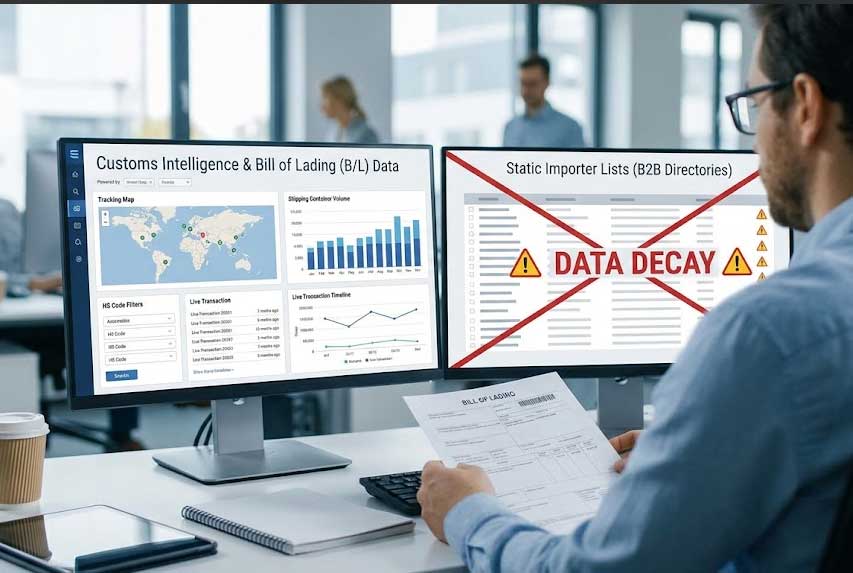
In modern B2B trade, the most authoritative evidence of procurement intent is customs bill-of-lading (B/L) manifests.
┌────────────────────────────────────────────────────────────────────────────────────────┐
│                   BILL-OF-LADING BUYER DISCOVERY PIPELINE                              │
├────────────────────────────────────────────────────────────────────────────────────────┤
│ 1. Filter by 6-digit Harmonised System (HS) Code.                                      │
│ 2. Audit corporate consignees receiving recurring shipments over the past 12 months.   │
│ 3. Map the overseas client base of direct domestic and regional competitors.           │
│ 4. Strip out intermediate freight forwarders to target executive procurement officers  │
│    (key decision-makers) directly.                                                     │
└────────────────────────────────────────────────────────────────────────────────────────┘
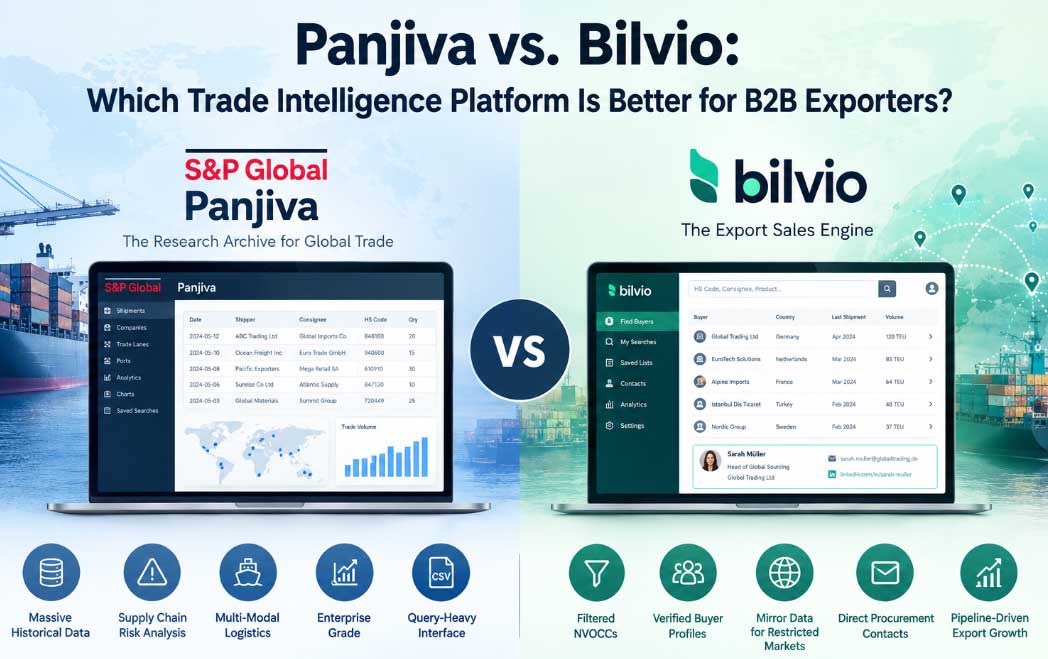
This is where advanced trade intelligence platforms transform market entry. By systematically interrogating customs manifests, exporters can identify foreign businesses that import their exact product lines on a recurring basis. Modern platforms automatically filter out third-party logistics operators and non-vessel operating common carriers (NVOCCs), revealing the actual importing entity and pairing it with verified contact information for their Procurement Directors and Category Managers.
Rather than sending cold promotional emails into general company inboxes, targeting active buyers whose existing supply chains match your capacity—and timing your proposal to coincide with their established purchasing cycles—delivers substantially higher engagement and conversion rates.
Leveraging State Incentives: What Does the Regulatory Framework Cover?
Under the statutory framework governing export subsidies (Decree No. 5973), trade ministries provide comprehensive grant programmes designed to lower market-entry barriers for developing businesses:
Market Research and Software Subscriptions: Up to 60% (and up to 70% in designated priority markets) of the annual subscription costs for approved trade intelligence and customs data platforms are reimbursable via state grants.
Overseas Market Research Travel: Flights, accommodation, and vehicle rental expenditures incurred while conducting face-to-face procurement meetings in target markets are subsidized up to 50% under defined annual limits.
Trade Fair Participation Subsidies: Stand construction, rental space, and standard freight costs for official national or approved individual trade-fair delegations are heavily offset on a per-square-metre basis.
Conformity Assessment and Market Entry Testing: Requisite international certification testing and standardisation accreditations (including CE, ISO, FDA, and Halal certifications) are subsidized up to 50%.
To qualify for these programmes, commercial entities must be registered with the Ministry’s central Support Management System (DYS), and all eligible expenses must be settled directly from corporate bank accounts against formal commercial invoices.
5 Critical Mistakes First-Time Exporters Must Avoid
Deploying Domestic-Grade Packaging: Consignments dispatched overseas are exposed to dynamic transit stresses, relative humidity, and extended dwell times. Wooden packaging, pallets, and crates must carry visible ISPM-15 heat-treatment certification marks; uncertified timber packaging will be refused discharge at destination ports and ordered for immediate re-export or destruction at the shipper’s expense.
Issuing Open-Ended, Unconditional Quotations: Failing to specify a formal validity clause (e.g. Validity: 15 business days from quotation date) exposes the enterprise to sharp escalations in raw-material indices, ocean-freight market spikes, or currency devaluations, legally obligating you to fulfill orders at a loss.
Signing Acceptance on Unchecked Letter-of-Credit Conditions: Ambiguous, unworkable stipulations embedded within a buyer’s documentary credit (such as requiring inspection certificates signed exclusively by the buyer’s local representative) trigger inevitable documentary discrepancies (“rezerv”), invalidating the issuing bank’s payment obligation.
Neglecting Destination Import Regulations: Ensuring cargo clears export customs domestically does not guarantee entry abroad. Unregistered chemical additives, non-compliant labeling standards, or omitted market registrations will cause destination customs to detain or destroy the consignment, billing all associated demurrage and destruction charges back to the exporter.
Ignoring Foreign Exchange Exposure: Transacting on extended deferred payment terms (open account) without hedging tools risks eroding manufacturing margins. Exporters should hedge against sudden currency volatility using forward contracts, options, or export credit insurance facilities through commercial banks or state export credit agencies.
Frequently Asked Questions (FAQ)
Can I export through a sole proprietorship, or is a limited company required?
You can legally export as a sole trader. Sole proprietorships are eligible to register with Exporters’ Associations, lodge customs entries through licensed brokers, and reclaim input VAT. However, for significant B2B contracts, establishing a private limited company (Ltd. Şti.) or joint-stock corporation (A.Ş.) generally inspires greater counterparty confidence among institutional buyers.
Is fluency in foreign languages mandatory to conduct export operations?
Business owners do not need to be personally fluent in multiple languages to export successfully. However, retaining in-house talent or engaging vetted commercial specialists who can handle technical negotiations, contract terms, and operational logistics in professional business English is critical to avoiding costly misunderstandings.
Is appointing a licensed customs broker legally required?
Although customs regulations permit direct representation by corporate officers, navigating the technical complexities of tariff nomenclature, valuation rules, and statutory customs software (BİLGE) makes working with a licensed customs broker under a notarised power of attorney standard commercial practice.
What is the practical difference between micro-exports (ETGB) and standard exports?
Micro-exports apply to non-commercial parcel consignments below 300 kg and €15,000, which are declared electronically by authorized express couriers (ETGB) without requiring customs broker appointments or association fees. Standard exports involve full customs entries (GÇB) for palletized, containerized, or high-value shipments, requiring full regulatory compliance and customs brokerage representation.
What is the most secure payment structure when dealing with a new foreign buyer?
For an initial commercial transaction with an unrated counterparty, the most reliable mechanism is securing a 30% advance cash deposit via telegraphic transfer (T/T), with the remaining 70% balance payable via Cash Against Documents (CAD) through banking channels or an Irrevocable Confirmed Letter of Credit (L/C). If open account terms are commercially unavoidable, consignments should be protected by comprehensive export credit insurance.
Where can I confirm the official HS Code (GTİP) for my manufactured product?
You can confirm your commodity classification by providing comprehensive technical datasheets, component breakdowns, and processing methodologies to your licensed customs broker. For complex products or legally binding determinations, formal applications can be submitted to regional customs directorates for a Binding Tariff Information (BTI) ruling.