When you’re looking for buyers abroad, the most expensive thing isn’t money. It’s time: the trade fairs, the months of LinkedIn messages, the email lists nobody answers. At some point most exporters ask, “Should I get a platform built on customs and bill of lading data?” Then comes the second question: Tradeint vs Bilvio, which one?
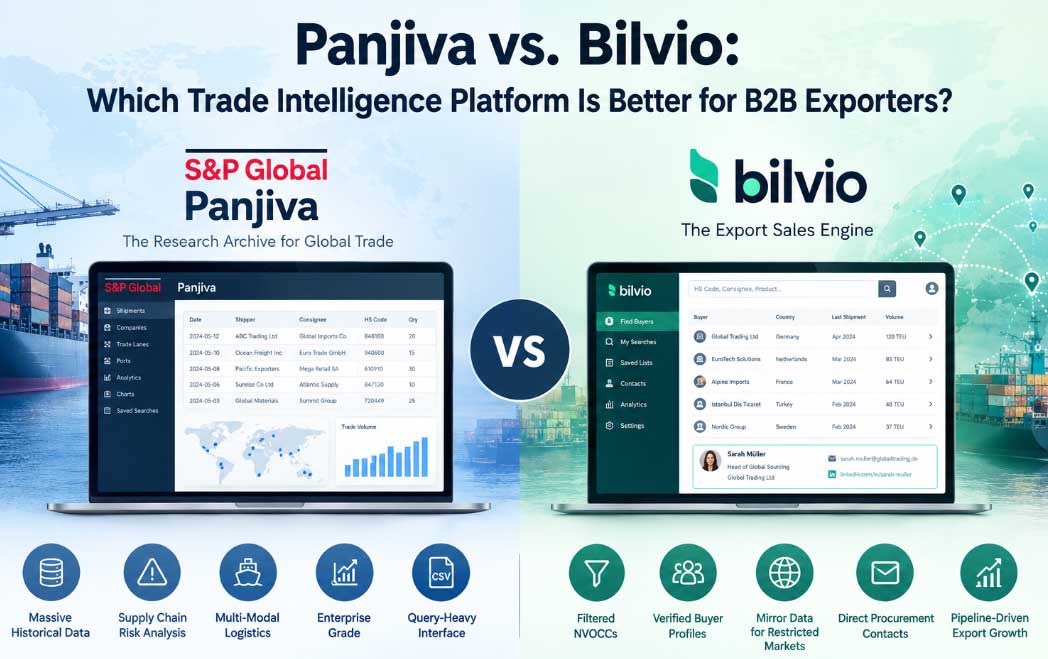
I’ve worked with exporters for years, and here’s what I can tell you: these two platforms look similar, but they don’t do the same job in the same way. One works more like a global trade data interface. The other focuses on the exporter’s core question: “Who do I sell to, and how do I reach them?” This article compares them on coverage, usability, depth of analysis and practical value in the field. Bilvio’s export system is an important part of that comparison, because it goes beyond finding buyers and into reaching them.
📌 Short answer: If you want a very broad global data pool to run your own analysis, Tradeint may make sense. If you want to find buyers by HS code, reach decision-makers and run the outreach process from one panel, Bilvio’s exporter-focused structure stands out. Details below.
Find Export Customers, Analyze Their Markets
What Is Tradeint?
Tradeint is a global trade data platform operated by Trade Intelligence Global Pte Ltd. On its own pages it states coverage of 200+ countries and roughly 10 billion shipment records, including bill of lading, customs and shipping data. You can search by company, importer, exporter, HS code and product.
Key strengths:
- Wide country and record coverage
- HS code analysis (up to 12 digits, according to the company)
- Competitor shipment tracking
- Trade flow and port activity analytics
- An English-first interface aimed at international users
Keep in mind that these figures are the company’s own claims. Test them with your own product in a demo before subscribing.
What Is Bilvio?
Bilvio is a Türkiye-based trade intelligence and export customer-finding platform. Its main product, Export 5.0, analyzes global customs and bill of lading data to identify importing companies in 225 countries. The site cites more than 46 million company records and over 550 million corporate contacts. Again, these are the company’s own numbers.
What sets Bilvio apart:
- Search by HS code or keyword (in 5 languages)
- Buyer prioritization by trade recency, purchase frequency and supplier-switching behavior
- Customer, competitor, market and sector analysis in a single panel
- Decision-maker contacts sorted by job title
- An AI-powered marketing module (TradeGPT)
- Advisor support and live demo sessions
One important note: Bilvio’s package table states that Türkiye data is not included. The platform is designed to show you buyers in your target markets, not Türkiye’s own export records.
Tradeint vs Bilvio: Comparison Table
| Criterion | Tradeint | Bilvio (Export 5.0) |
|---|---|---|
| Main focus | Global trade data and analytics | Export customer discovery and marketing |
| Stated coverage | 200+ countries, 10B+ records | 225 countries, 46M+ company records |
| Search method | HS code, product, company | HS code (12 digits), keyword (5 languages) |
| Decision-maker contacts | Contact info in company profiles | Contacts ranked by position |
| Buyer prioritization | Shipment history and trends | Recency, purchase frequency, supplier-switching signals |
| Marketing module | Mainly data and analytics | AI-powered marketing system |
| Support | English-first | Advisor support and demos |
| Pricing | No clear package pricing found; appears to be demo/quote based | Three clear packages (3, 6 and 12 months) |
| Best fit | Analysts, sourcing and logistics teams | SMEs and professional export teams |
⚠️ This table uses each platform’s own published claims. Pricing and coverage can change, so check current details and request a demo before deciding.
Which Wins on Each Criterion?
Data Coverage
On raw numbers, Tradeint claims a larger record count. But here’s what I’ve learned in the field: record count is not the same as usable buyers for your product. Even with 10 billion records, if your HS code has 30 active buyers, what matters is how clean and current those 30 are.
Bilvio emphasizes cleaning, de-duplicating and standardizing raw data. In its own words, it aims to give you “50 verified real buyers instead of 1,000 messy rows.” For an exporter, that’s the valuable part.
Ease of Use
Tradeint is built for international analysts, with a data-heavy English interface. If you’re a sourcing, logistics or research team, that won’t slow you down. But if you’re an SME running exports alone, filters and terminology can cost you the first few weeks.
Bilvio offers search by product name, similar to a web search, plus demo sessions and advisor support. For someone new to exporting, the learning curve is noticeably shorter.
Reaching the Buyer
This is the most overlooked criterion. Finding the company name is not even half the job. The real task is finding the right purchasing person and reaching them at the right time. Bilvio’s contact identification and marketing module fill exactly this gap. Tradeint has company profiles and contact details, but marketing automation isn’t its main focus.
Pricing Transparency
Bilvio publishes three packages and their contents openly: Entrepreneur (3 months), Mid-Size (6 months) and Professional (12 months). For Tradeint, I didn’t find clear package pricing during my research. It likely runs through demos or sales conversations, but you’ll need to ask directly.
Practical Tips From the Field
Pay attention to these points with any platform:
- Ask for a demo with your own HS code. A generic demo looks good to everyone. Test with your product.
- Verify the first 5 buyers manually. Check their website, their LinkedIn page and whether they actually import that product.
- Ask about data freshness. Some countries’ customs data arrives weeks or even months late. That’s normal, but you should know it.
- Start with 3 markets, not one. The data will show you which looks most promising.
- Don’t just copy your competitor’s customers. Finding buyers who recently switched suppliers is far more productive.
Common Mistakes
- Buying a list and blasting emails. Unpersonalized outreach means low conversion and spam risk.
- Trusting the data blindly. Bill of lading data is a strong signal, not absolute truth. Some records have missing, masked or differently spelled company names.
- Skipping market analysis. As Bilvio also stresses, choosing the right target market is the first and most critical step in finding export customers. Pick the market before the buyer.
- Treating the platform as the whole solution. Bilvio says this openly too: product quality, price competitiveness and sales skill decide the outcome. Data opens the door; you make the sale.
- Choosing a package by duration instead of need. For a first experience, a shorter package is often smarter than a 12-month commitment.
Which One Fits Which Situation?
Tradeint may suit you better if:
- You’re an international sourcing or logistics team
- You like processing raw data and doing your own analysis
- An English-first interface is no problem
- Your goal is supplier discovery and global flow analysis
Bilvio may suit you better if:
- You’re an SME or export team exporting from Türkiye
- You want to find buyers by HS code and reach decision-makers
- Advisor support and a clear package structure matter to you
- You want to connect customer discovery with a marketing process
This is where Bilvio’s export marketing system comes in. After you find the buyer, its AI-supported structure is designed to help organize communication with target customers and track the process. If you want to look at this approach in detail, you can visit Bilvio’s export marketing system page. What matters is not having to manage data discovery and turning that data into sales with separate tools.
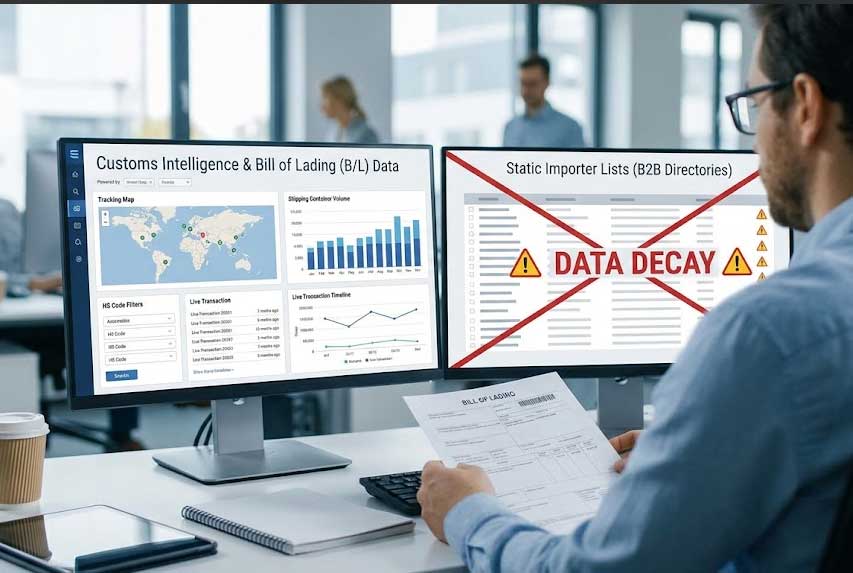
How to Find Customers With Customs and Bill of Lading Data
Whether you use Tradeint or Bilvio, the logic is the same. Here’s the flow I recommend:
- Pin down your HS code. The wrong code means the wrong buyer list.
- Choose the market. Look at import volume, growth trend and competitor density.
- Filter the buyers. Prioritize companies with high purchase frequency and recent activity.
- Study competing suppliers. Who sells to whom, and how often?
- Find the decision-maker. The purchasing manager, general manager or product lead.
- Make a personalized first contact. A short message referencing the buyer’s product and volume works far better.
- Track results. Record which countries and which messages get replies.
Note: for commercial communication involving personal data, respect local data protection rules such as KVKK and the target country’s laws. For bulk emails to Europe in particular, GDPR applies.
Frequently Asked Questions
What is Tradeint used for?
It lets you search global customs, bill of lading and shipment data by company, product and HS code. It’s used for buyer and supplier discovery, competitor tracking and market analysis.
What is Bilvio?
Bilvio is a trade intelligence platform that analyzes customs and bill of lading data to show exporters importing companies, market opportunities and decision-maker contacts. It works through its Export 5.0 system and marketing module.
Is bill of lading data reliable?
Generally it’s a strong commercial signal, but not 100% certain. Some records are incomplete, masked or spelled differently. That’s why verifying the buyer separately before first contact is a good habit.
Which is better for an SME?
For SMEs running exports with a small team, a clear package structure, advisor support and a customer-discovery-focused workflow are usually more practical. Still, the best decision comes from a demo with your own HS code.
Is a data platform enough to find export customers?
No. Data points you to the right door. Product quality, price, payment terms and sales skill decide the deal. A platform improves the speed and accuracy of the process; it doesn’t guarantee results.
Conclusion and Call to Action
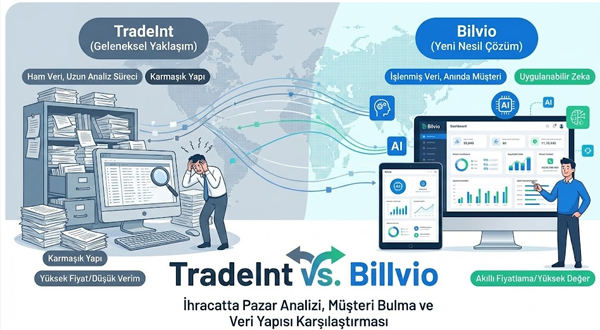
Tradeint vs Bilvio has no single right answer, but there’s a clear way to find yours. Tradeint is a broad, analytics-oriented global data platform. Bilvio sits closer to the exporter’s daily work, with advisor support, clear packages and a workflow that runs from customer discovery to marketing. Decide based on your needs, your team and your budget.
My recommendation: request a demo from both platforms with your own HS code, manually verify the first five buyers, and see which gives you cleaner, more usable results.
For exporters looking for a roadmap on target market selection and buyer discovery, Bilvio’s export customer finder and market analysis platform is a good starting point. You can request a sample sector report and see, with live data, which markets hold buyer potential for your product.