What Is Export?
Export is the process of selling goods and services produced in one country to buyers abroad, in line with the relevant customs regulations. For a business, exporting is more than a way to grow revenue; it is a strategic move that diversifies risk, builds brand value, and supports sustainable growth.
This article walks through the core concepts, the documents you will need, and the steps in the process for any company starting out in export.
Find Export Customers,
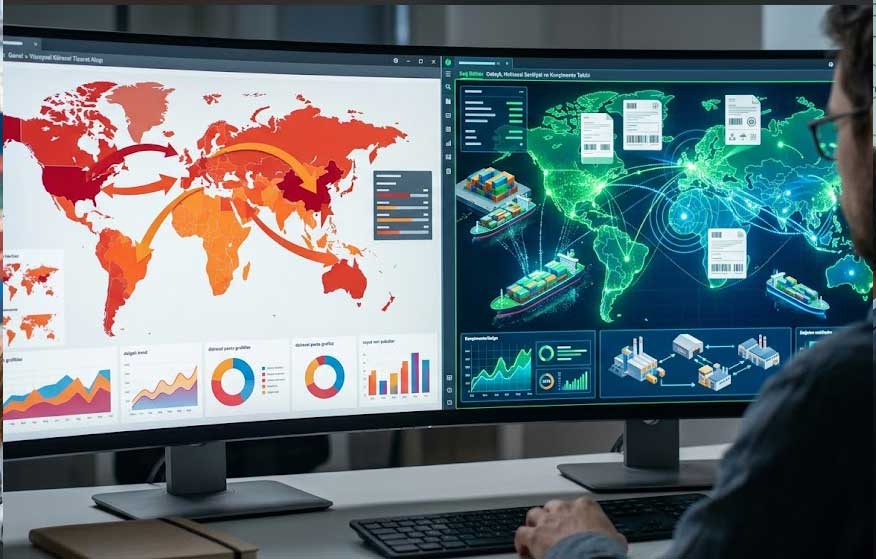
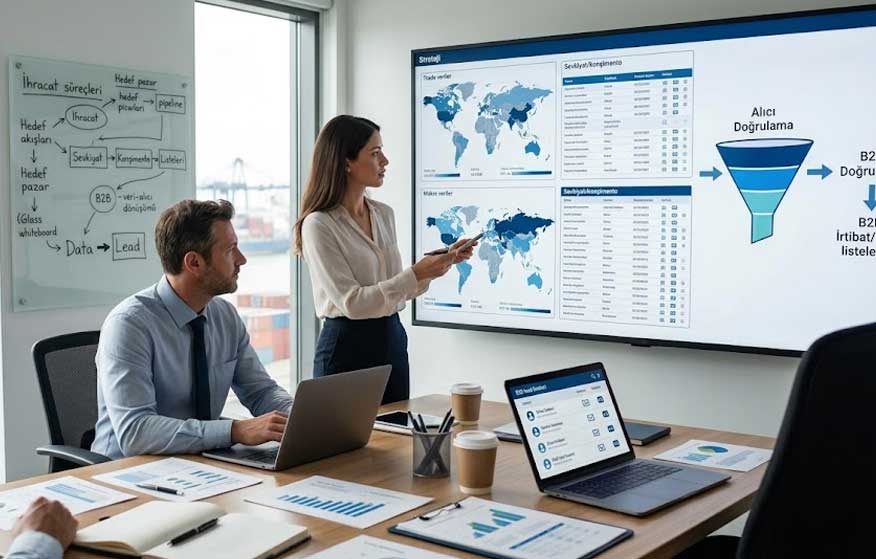
Analyze Your MarketsExport 5.0 surfaces real importers and suppliers in your target market in seconds, reads current trade flows, and routes you to the corporate contacts that matter. It is the operating layer for exporters who plan strategically rather than chase leads.
Export 5.0 System
The Benefits of Exporting
Expanding into new markets: the business broadens its customer base and opens access to demand it cannot reach domestically. The related article is here.
Risk diversification: a book that does not depend on local demand alone holds up better in domestic downturns.
Utilizing full production capacity: economies of scale work in your favor as volume rises.
Foreign exchange revenue and financial strengthening: cash flow and capital structure both improve.
Brand awareness: a presence in international markets lifts both product perception and brand value.
Types of Exports
Unrestricted Export: products that do not require any additional authorization.
Exports Subject to Prior Approval: sectors that require special permits, including defense, chemicals, and strategic raw materials.
Registration-Based Exports: certain products must be registered before they can be exported.
Credit Export: a model where payment is collected on credit or in installments.
Steps to Take Before You Start Exporting
1. Membership in the Exporters’ Association
Membership in the relevant exporters’ association is mandatory based on the product category. Once the admission fee is paid, your export operations are officially active.
2. Working with a Customs Broker
A qualified customs broker keeps customs declarations clean and fast: tariff classification, document checks, and inspection workflows all run more cleanly with one in place.
3. Determining the Correct HS Code
The Harmonized System (HS) code provides the international classification of a product and ensures the correct tax rate is applied. Bad coding leads to extra cost and delays. For more on the HS code, the full article is here.

How the Export Process Works
1. Market Research
Demand, price ranges, distribution channels, and competitive dynamics in the target country are analyzed at this stage. Trade offices, sector reports, and digital trade databases are the most useful inputs.
2. Customer Acquisition and Proforma Invoice
Potential buyers are contacted and sent a pro forma invoice with price, delivery terms, and payment method laid out clearly.
3. Contract and Production Plan
The export contract between the parties sets out product description, delivery dates, Incoterms, and payment terms. The production and inventory plan is built off that contract.
4. Document Preparation
Required Documents:
Commercial invoice
Packing list
Customs declaration
Bill of Lading (road, sea, air, rail)
Optional documents by product or country:
Certificate of Origin
A.TR or EUR.1 movement certificates
Health and Plant Health Certificate
Insurance policy
5. Customs Procedures and Inspection
An electronic customs declaration is filed, and the product passes inspection through the yellow, red, or blue lane.
6. Shipping and Export Procedures
A freight agreement is signed with the carrier, the cargo is loaded, and the shipment leaves the country.
Payment Methods
Cash in Advance: the buyer pays before shipment. Safest model for the exporter.
Letter of Credit: payment is released against specified conditions, backed by a bank guarantee.
Documentary Payment: payment is made against the presentation of documents.
Cash on Delivery: payment lands after delivery. Highest-risk model for the exporter.
Foreign Currency Collections and Exchange Transactions
Export proceeds must be repatriated within six months of the actual export date. The bank issues a Foreign Exchange Acceptance Certificate, and the transaction is closed out.
Grants and Incentives
Non-repayable grants for activities such as market research, trademark registration, and the rental of overseas offices and warehouses.
Low-interest loans and guarantee mechanisms.
Dedicated R&D and marketing incentives for technology- and design-led companies.
Tips for Risk Management
Regulatory compliance: stay current on customs and quality standards in target markets.
Certification: CE, FDA, organic, and ISO certifications smooth market entry.
Logistics optimization: warehousing, multimodal transport, and insurance bring shipping cost down.
Digital marketing: multilingual websites and B2B platforms broaden the customer base.
Financial hedging: manage currency risk through forward contracts, and absorb raw-material price swings through long-term supply agreements.