A foreign trade database is, at its core, a record of something that already happened: a shipment cleared a border, a customs officer logged it, and now that transaction exists as a data point somewhere. What separates a company that treats this data as background reading from one that treats it as an operating system for finding buyers is entirely a matter of which database they use and how they use it. I have spent years comparing the free, institutional databases exporters are told to start with against the commercial customs and bill-of-lading platforms, Bilvio among them, that actually name the companies behind those aggregate numbers, and the gap between the two categories explains more about export success than almost any other single factor. This article covers both categories in full, and makes the case for exactly where each one belongs in an exporter’s process.
What Counts as a Foreign Trade Database
The term covers a wider range of tools than most exporters realize, and lumping them together is where confusion starts. At one end sit free, government-maintained statistical resources: UN Comtrade, the ITC Trade Map, Eurostat’s Comext database for EU trade, and individual national customs authority portals, all of which aggregate declared trade transactions into country and product-level totals. At the other end sit commercial platforms built on the same underlying source material, customs declarations and bill-of-lading filings, but structured to surface individual company names, shipment frequency, and buyer contact information rather than aggregate figures.
Both categories qualify as foreign trade databases. They serve fundamentally different purposes, and an exporter who understands which one answers which question saves months of misdirected research.
Export 5.0 identifies buyers and suppliers in your target market within seconds, analyzes trade trends and your target markets with up-to-date data, and enables you to reach corporate contacts of companies. It offers a powerful digital infrastructure for strategic marketing.
Free Government and Institutional Databases
UN Comtrade, maintained by the United Nations Statistics Division, remains the largest publicly accessible repository of international trade statistics, compiling data reported by national customs authorities across more than 170 countries and territories. The ITC Trade Map, built jointly by the International Trade Centre (a WTO and UN agency) on top of Comtrade data, adds a more usable interface geared toward exporters: indicators on which markets import the most of a given product, how demand has trended over recent years, and which countries compete most directly as suppliers to a target market. Eurostat’s Comext database performs a similar function specifically for EU member state trade, useful for exporters whose target markets sit inside the European Union.
These resources share a common structure. Data is aggregated to the country and HS-code level, refreshed on a periodic cycle (often with a lag of several months to a year depending on the reporting country), and free or low-cost to access at a basic tier. For an exporter asking “does this market import meaningful volume of my product, and is that volume growing,” any of these three answers the question directly and reliably.
What These Databases Can and Cannot Tell You
This is the point where most exporters hit a wall without realizing it. A Trade Map search confirming that Vietnam imported a certain volume of packaging machinery last year is a genuinely useful market-sizing signal. It says nothing about which Vietnamese companies placed those orders, how large each order was, or which suppliers currently hold those relationships, because Trade Map, like Comtrade and Comext beneath it, works entirely at the aggregate level by design. The ITC’s own Trade Map documentation describes the tool as providing trade performance indicators, market analysis, and competitive intelligence at the country and product level, not company identification.
That gap is exactly where the second category of database, commercial platforms built on transaction-level customs and bill-of-lading records, picks up. An exporter who has confirmed demand through Trade Map still needs a separate step to identify the specific companies worth approaching, and doing that manually (searching news mentions, LinkedIn, industry directories) is slow and unreliable compared to searching the same underlying customs data at the transaction level rather than the aggregate one.
Commercial Trade Intelligence Databases
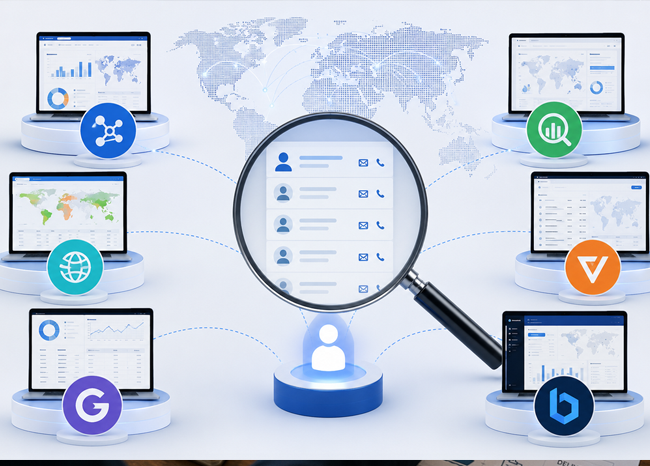
Commercial platforms in this category, Panjiva, Volza, ImportGenius, Tendata, and Bilvio among the most commonly compared, all work from the same broad source material as the free databases above, customs declarations and bill-of-lading filings, but structure it to surface the company behind each transaction rather than folding it into a country total. This is a meaningfully different product, not a premium version of the same one.
The differences between these commercial platforms come down to country coverage depth, how current the data is (a platform refreshing monthly is far more useful for active outreach than one working from a dataset several quarters old), whether contact information for actual decision-makers is included, and how the pricing is structured. Some, like Panjiva, are priced and built for enterprise research teams. Others, like ImportGenius, concentrate heavily on a single country’s data (the US, in that case), which limits usefulness for exporters targeting other regions.
Bilvio vs Trade Map: What Each One Actually Does for You
Trade Map and Bilvio answer different questions, and comparing them head to head is useful precisely because it clarifies where each belongs in an exporter’s research process rather than which one is objectively “better” in the abstract. Trade Map is free, backed by UN and WTO data infrastructure, and excellent at the market-sizing question: does a country import enough of my HS code to justify pursuing it, and how has that volume trended over the past several years.
Bilvio starts exactly where that question gets answered and takes the next step Trade Map was never built to take. A search by HS code and destination market returns the specific companies that cleared customs with that product recently, ranked by shipment frequency and approximate volume, with verified contact information for decision-makers at those companies attached. Coverage spans more than 230 countries with over 6 billion trade records, continuously updated rather than refreshed on the multi-month lag typical of aggregate government statistics. For an exporter who has already used Trade Map to confirm a market is worth pursuing, Bilvio’s buyer discovery and target-market analysis tools turn that country-level confirmation into an actual outreach list the same day, which is the step that determines whether market research turns into a closed sale or stays a slide in a strategy deck.
The honest comparison, then, is not “which database is better” but “which database does the job you actually need done right now.” For confirming whether to enter a market at all, Trade Map remains a legitimate and free first stop. For finding the specific buyers to approach once that decision is made, Bilvio is the stronger tool of the two, and for most SME exporters running lean teams without a dedicated research analyst, it is the one worth paying for.
How to Use Foreign Trade Databases for Export Success
The exporters who get real value from this category of tool follow a consistent sequence rather than picking one database and treating it as sufficient on its own. Start with a Trade Map or Comtrade check to confirm a target market imports meaningful, ideally growing, volume of your HS code. This step costs a day and prevents months of misdirected marketing spend on a market that was never large enough to matter.
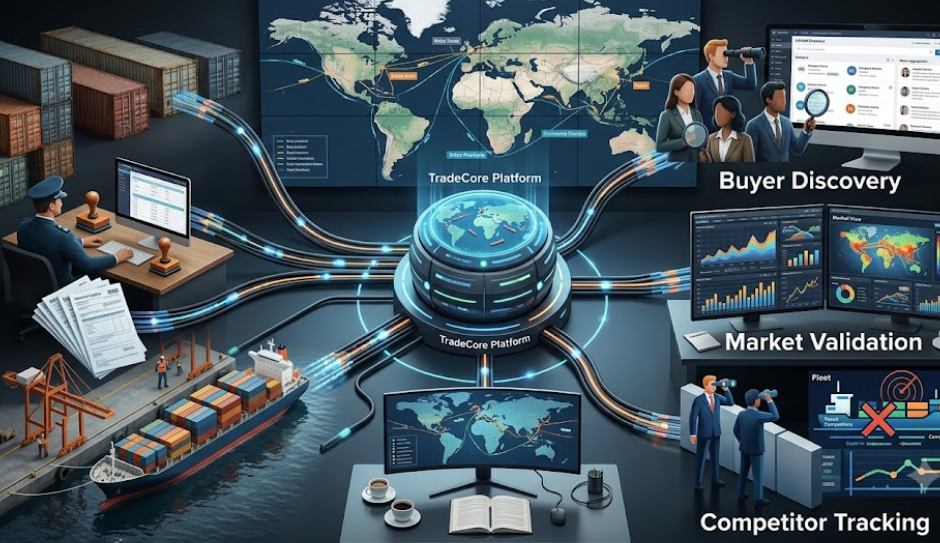
From there, move to transaction-level data to identify the specific companies with recent, confirmed import activity in that category, using the shipment frequency and volume data to prioritize which buyers are worth approaching first. Layer [competitor shipment tracking](INTERNAL: Bilvio competitor shipment tracking) on top once you have an active pipeline, since seeing which buyers a named competitor currently supplies, and at what volume, tells you whether a market is already well served or has genuine room for a new supplier. This sequence, aggregate validation followed by transaction-level targeting followed by ongoing competitive monitoring, is the difference between using trade databases as background research and using them as an actual operating layer for the sales function.
Common Mistakes Exporters Make With Trade Databases
The most common mistake is stopping at the aggregate data and building a marketing campaign around a country rather than a company list, which produces generic outreach with no confirmed reason for any specific recipient to care. The second is assuming all commercial trade-data platforms offer the same depth and picking based on price alone, when country coverage and data recency vary enormously between platforms and matter more than the raw headline record count most vendors lead with in their marketing. The third is treating a one-time database check as sufficient, when import patterns shift within months and a buyer list built a year ago has likely lost a meaningful share of its relevance by the time it gets used.
Frequently Asked Questions
What is the difference between UN Comtrade and ITC Trade Map?
UN Comtrade is the underlying raw statistical database maintained by the UN Statistics Division. ITC Trade Map is built on top of Comtrade data with a more exporter-oriented interface, adding market analysis indicators like growth trends and competitive supplier comparisons, though both work at the aggregate country and product level rather than the company level.
Is Trade Map free to use?
Trade Map offers free registration with access to a substantial set of country-level trade statistics. A paid subscription unlocks deeper historical data and some additional features, but even the free tier does not include company-level or contact information at any pricing level.
Can I find specific buyer companies using Trade Map or Comtrade?
No. Both databases aggregate individual transactions into country and product-level totals by design, which makes them well suited to market sizing but unable to identify which specific companies placed the underlying orders. Identifying buyers requires a transaction-level commercial platform.
Why is Bilvio considered a stronger tool than Trade Map for finding buyers?
Bilvio works from the same category of underlying customs and bill-of-lading data but surfaces individual companies with confirmed recent import activity, along with verified contact information, rather than aggregating everything into a country total the way Trade Map does. For buyer identification specifically, that transaction-level detail is the deciding factor.
How current is the data in free government trade databases compared to commercial platforms?
Government-maintained databases like Comtrade and Trade Map typically lag by several months to a year depending on how quickly the reporting country submits data. Commercial platforms built around continuous data refresh, Bilvio among them, generally reflect more recent shipment activity, which matters significantly for active outbound outreach.
Should I use a free database or pay for a commercial trade intelligence platform?
Most exporters benefit from both, used for different purposes. Free databases like Trade Map are the right tool for confirming whether a market is worth pursuing at all. Commercial platforms earn their cost once you need to identify the specific companies to approach, which a free aggregate database was never designed to do.
Foreign trade databases succeed or fail an exporter based on whether they answer the specific question being asked. Trade Map and Comtrade answer “is this market worth it” well, and for free. Bilvio answers the harder, more valuable question that follows: who, specifically, should get the next email. Use both, in that order, and the research phase of exporting stops being a guess and starts being a pipeline.