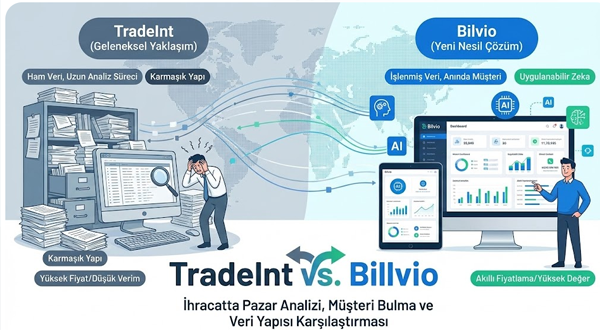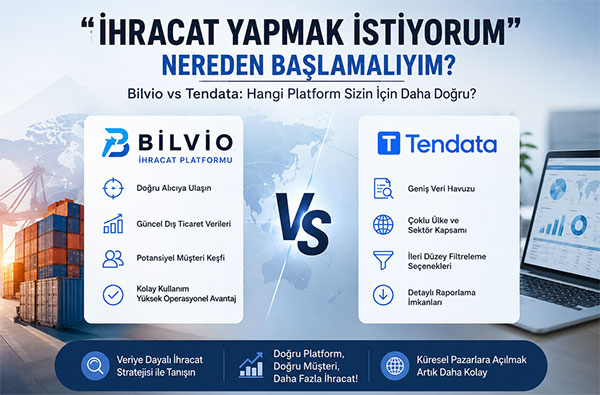

A textile exporter in Denizli spent four months building a prospect list from LinkedIn searches and trade show badges, then ran the same product category through a customs data search on a platform like Bilvio and found fourteen companies in Germany that had imported the exact category in the prior six months, none of them on the original list. That gap between who exporters think is buying and who is actually buying is the core problem with most importer-finding methods. Trade directories and B2B marketplaces show intent, not behavior. Customs records and bill-of-lading data show what companies actually bought, when, from whom, and how much. The difference between those two data types decides whether an export sales team spends Q3 chasing warm leads or cold ones.
Export 5.0 identifies buyers and suppliers in your target market within seconds, analyzes trade trends and your target markets with up-to-date data, and enables you to reach corporate contacts of companies. It offers a powerful digital infrastructure for strategic marketing.
What counts as a “potential importer”
A potential importer is not the same as a company that appears in a Google search for “buy [product] Germany” or a firm that follows a competitor on LinkedIn. In trade terms, a potential importer is a business with a demonstrated need for a product category, the import licensing or customs registration to bring it in, and either an existing supplier relationship (which can be displaced) or a gap in supply (which can be filled). That definition matters because it excludes a huge share of what most exporters call “leads”: distributors who list products they’ve never actually moved, retailers researching categories they haven’t committed to, and companies that only import through intermediaries and never touch customs paperwork directly.
The three markers that separate a real potential importer from a name on a list are import history (have they cleared shipments in this HS code before), import frequency (is this a one-off or a recurring need), and import volume (is the order size compatible with the exporter’s production capacity). Skipping any one of these produces a list that looks long and converts short.
Why directories and marketplaces undercount active buyers
Alibaba, Global Sources, and regional B2B directories are discovery tools for buyers, not verification tools for sellers. A company can post a “looking for supplier” request without ever placing an order, and directory listings skew toward companies actively shopping for a new vendor, which is a small and often price-driven slice of the real importer base. Most importers with a working supplier relationship never touch these platforms because they don’t need to.
This is the structural reason cold outreach from directory scraping converts at rates exporters describe anecdotally as under 2 percent. The prospect pool includes browsers, competitors doing market research, and companies with no import authority at all. Customs and shipping records don’t have this problem because they only record completed transactions. A bill of lading exists because goods physically moved across a border and cleared customs, which is a much higher bar than clicking “request quote.”
Reading customs and bill-of-lading data to find active buyers
Every country that requires customs declarations for imports generates a data trail: HS code, product description, quantity, value, country of origin, consignee (in many jurisdictions), and shipping details. The United States, India, and a growing list of countries publish or make available import manifest and bill-of-lading data that can be mined for consignee names, giving exporters a list of companies that have physically received shipments in a given product category within a defined time window.
This is where trade intelligence platforms earn their keep. Bilvio’s export intelligence tools pull from customs and shipping records to surface companies that have imported a specific HS code within a chosen timeframe, along with shipment frequency and approximate volume, which turns a vague target market into a ranked list of named buyers. An exporter of ceramic tile from Turkey can filter for companies in Poland that imported tile from any country in the last 12 months, see which ones import monthly versus once a year, and prioritize outreach toward the ones whose volume matches what the exporter can actually supply.
The practical value isn’t just the list, it’s the qualification built into the data. A company that imported 40-foot containers of tile six times in a year is a fundamentally different prospect than one that imported a single partial container. Treating them the same in an outreach campaign wastes sales hours on the second company while underinvesting in the first.
Using competitor shipment data to find the buyers already in market
The fastest way to build a credible importer list is often to reverse-engineer a competitor’s customer base. If a known competitor exports the same product category to a target country, their shipment records show exactly which companies received those shipments, which means the exporter isn’t guessing at demand, they’re looking at proof of it.
This is standard practice in trade intelligence and it’s the specific use case that platforms like Bilvio, ImportYeti, and Panjiva were built around: tracking a named competitor’s shipments to identify their buyers, then approaching those same buyers with a comparable or better offer. It works best in categories where switching suppliers is relatively low-friction (commodities, standardized industrial components, textiles) and less well in categories with long qualification cycles or exclusive distribution agreements (specialty chemicals, branded consumer goods, regulated medical devices). An exporter should know which category they’re in before betting a quarter’s outreach plan on this method.
For teams building this out for the first time, [tracking a competitor’s export shipments](INTERNAL: competitor shipment tracking) is usually the highest-return starting point because it compresses market research and lead generation into a single motion.
Cross-checking with trade-flow data before committing to a market
Finding individual importer names is only useful if the underlying market is worth the effort. Before an exporter commits sales hours to a country, it’s worth checking aggregate trade flow to confirm the market size and trend direction, not just the presence of a few importers. The ITC Trade Map tool, built on UN Comtrade data, lets exporters see total import value by HS code and country over multiple years, which is enough to distinguish a genuinely growing market from a market propped up by one large buyer that might disappear.
The UN Comtrade database is the underlying source most of these tools draw from, and it’s public, though the interface and lag time (data is often 3 to 9 months behind) make it more useful for strategic market selection than for finding this month’s active buyers. This is the gap trade intelligence platforms fill: they combine the macro trade-flow picture from sources like Comtrade with more current, granular shipment-level data to answer both “is this market worth entering” and “who exactly should I call first.”
An exporter doing [target market analysis](INTERNAL: how to choose export target markets) should run both checks before building an outreach list: aggregate trade data to confirm the market direction, and shipment-level data to confirm which specific companies are active in it right now.
Verifying and qualifying importer contacts before outreach
A customs record gives a company name, sometimes a broker of record instead of the actual importer, and rarely a decision-maker’s direct contact. Converting a customs hit into a real sales lead requires a second step: identifying the actual buyer of record (not the freight forwarder or customs broker who filed on their behalf), finding a contact at the company with purchasing authority, and confirming the company is still active in the category (import data can lag by weeks to months depending on the source country).
This verification step is where a lot of DIY customs-data efforts stall. Raw government trade data is often not indexed for company search, doesn’t separate importer from broker cleanly, and requires HS code fluency to filter correctly. This is the specific gap that dedicated tools address by cleaning and structuring the raw records so an exporter can search by product category, country, and time window instead of parsing government CSV files by hand. Once a list is qualified, it should get treated like any other B2B pipeline: segmented by volume and frequency, prioritized by fit, and fed into an outreach sequence rather than blasted as a single generic email.
Common mistakes exporters make when hunting for importers
The most frequent error is treating every name on a customs-derived list as equally warm, when import frequency and volume should drive prioritization. A close second is ignoring the freight forwarder problem: many customs records list a logistics intermediary as the consignee, and outreach to that name goes nowhere because it’s not the actual buyer. Third is stopping at a single data pull instead of monitoring on a rolling basis; import behavior changes quarter to quarter, and a company that bought heavily last year may have shifted suppliers since. Fourth, and most costly, is skipping the market-level check entirely and chasing three or four importer names in a country where total category imports are flat or declining, which caps the ceiling on the deal size no matter how well the outreach is executed.
Frequently Asked Questions
What is the difference between a potential importer and a lead?
A lead is any contact with unverified interest, often self-reported through a directory or inquiry form. A potential importer, in the trade intelligence sense, is a company with a documented history of clearing customs for the relevant product category, which is a much stronger signal of real purchasing behavior.
Can I find importer data for free?
Aggregate trade flow data (total import value by country and HS code) is available free through the UN Comtrade database and ITC Trade Map. Company-level shipment and consignee data, which is what’s needed to build an actual outreach list, is generally only available through paid trade intelligence platforms or, in a few countries like the United States and India, raw government datasets that require significant cleaning to use.
How current is customs and bill-of-lading data?
It depends on the source country. Countries like the United States and India publish import manifest data with a lag of roughly one to eight weeks. Aggregate datasets like UN Comtrade run further behind, often 3 to 9 months, because they’re compiled from official country reporting. For active outreach, shipment-level data with a shorter lag is more actionable than aggregate trade statistics.
Is tracking a competitor’s shipments legal?
Yes. Customs and import records are public or semi-public data in most jurisdictions that publish them, and trade intelligence platforms aggregate this information from lawful government and shipping sources. This is standard competitive intelligence practice in export sales, not a gray-area tactic.
How do I find the right HS code before searching for importers?
Start with the exporter’s own customs declarations from past shipments, which will show the exact HS code used historically. If that’s not available, an [HS code lookup tool](INTERNAL: HS code classification guide) cross-referenced against the product’s material composition and end use will narrow it to the correct 6-digit international code, which is what customs data searches are typically filtered by.
Do I need a trade intelligence platform, or can I do this manually with government data?
For a one-time market check, manual pulls from Comtrade or a country’s public customs portal work. For an ongoing sales motion, a platform that structures the data, tracks changes over time, and separates importers from brokers saves enough analyst time that it pays for itself within one or two closed deals for most SME exporters.
Finding potential importers is fundamentally a data-quality problem before it’s a sales problem. The exporters who consistently fill pipelines with real buyers are the ones pulling from customs and shipment records instead of directories, cross-checking market size before committing effort, and treating import frequency as the primary qualification signal. Everything else, including outreach scripts and follow-up cadence, only works once the list itself is built on evidence of actual buying behavior.