
Most exporters shopping for lead data use the two terms interchangeably, then discover mid-campaign that the list they bought solves the wrong problem. An export buyer database and an importer database are not synonyms. They are built from different sources, structured around different commercial intentions, and useful at different stages of an export sales cycle. Confusing them costs time in the best case and burns a significant portion of a marketing budget in the worst. The distinction is narrow enough that vendors rarely explain it clearly, which is convenient for them and expensive for you.
What Each Term Actually Describes
An importer database is a directory of companies that have recorded import activity. The underlying data typically comes from customs declarations, port manifest records, or bill-of-lading filings. When a shipment crosses a border, the receiving party files documentation with the destination country’s customs authority. Those records are aggregated, cleaned, and sold as databases. The importer is a legal and logistical category: the entity that cleared the goods.
An export buyer database is a broader marketing concept. It refers to any compiled list of companies that purchase goods from foreign suppliers, regardless of whether the compiler sourced that information from customs records, trade directories, B2B platform registrations, web scraping, or purchased third-party lists. The term “buyer” implies commercial intent, but the data quality behind it varies enormously.
The practical difference: importer databases tell you what actually moved across a border, documented by governments. Export buyer databases, as a category, tell you what a data vendor believes represents purchase intent, based on whatever sources they used to build the list.
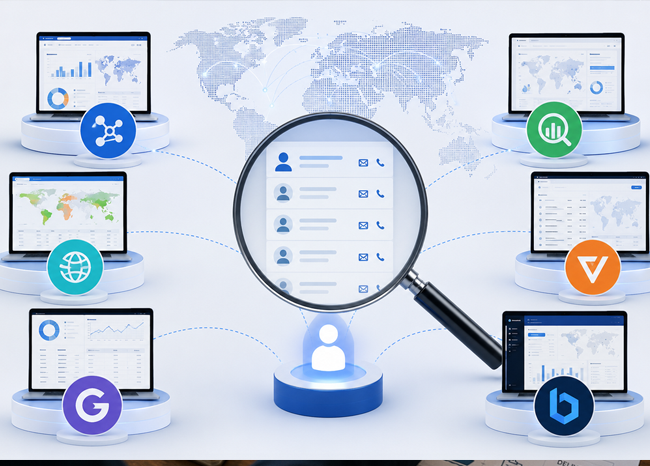
Export 5.0 identifies buyers and suppliers in your target market within seconds, analyzes trade trends and your target markets with up-to-date data, and enables you to reach corporate contacts of companies. It offers a powerful digital infrastructure for strategic marketing.
Where the Data Comes From
Customs-derived importer data flows from a small number of authoritative sources. The United States publishes bill-of-lading records through its Automated Manifest System, which is why US import data is the most granular and widely available. India’s Directorate General of Commercial Intelligence and Statistics (DGCIS) releases import and export transaction data at the shipment level. Several Latin American customs authorities, including those in Colombia, Mexico, and Ecuador, publish transaction-level records. The EU does not release company-level customs data publicly, though Eurostat publishes aggregate trade statistics by product and country.
This matters because it determines what the database can actually prove. A record that comes from a US Customs bill of lading tells you the consignee name, the HS code, the origin country, the port of entry, the shipping line, the volume, and often the declared value. That is verified, timestamped trade activity. A company name on a generic export buyer database may have come from a LinkedIn profile, a trade show registration form, or a website that listed “import” as a business activity.
ITC TradeMap, maintained by the International Trade Centre, provides aggregate trade flow data by HS code and country, which is useful for validating market sizing before going to company-level records.
Why the Distinction Matters for Export Sales
If you are a Turkish manufacturer of ceramic floor tiles trying to enter the German market, you need companies that are actively placing import orders for ceramic tiles right now, or at a frequency close enough to now that they are evaluable prospects. A customs-derived importer database gives you a list of German companies that cleared HS 6907 (ceramic flags and paving) shipments in the past 12 to 24 months, ranked by volume, with a view into which suppliers they currently use and how often they rotate.
A generic export buyer database might give you a list of German flooring companies with import keywords in their business description. Some of those companies will be active importers. Some will be domestic distributors who have never placed an international order. Some may have imported once in 2019 and moved entirely to local sourcing since then.
The sales consequence is concrete. Your outreach team works through 200 contacts. With the customs-derived list, most of the 200 are verified active importers of your product category. With the directory-style list, you may find that 40 or 50 are genuinely relevant, and the rest consume follow-up cycles that produce nothing. For an SME with a two-person export sales team, that difference determines whether the quarter produces pipeline or frustration.
Bilvio’s export intelligence platform at bilvio.com/ihracat pulls from customs and bill-of-lading records across multiple trade corridors, which means the buyer profiles it surfaces represent documented import activity rather than inferred intent. When evaluating any platform, the right question to ask is: does this record trace to a customs filing, or to a directory?
How to Evaluate a Database Before You Buy Access
Ask five questions before committing to a subscription or a data purchase:
What is the primary source? Customs filings and bill-of-lading records are the gold standard. Trade directories, B2B registrations, and scraped web content are secondary sources that may supplement but should not replace customs data for prospecting.
Which countries are covered at the transaction level? US, India, Colombia, Mexico, Ecuador, Philippines, and several other markets publish shipment-level records. EU, Japan, and China do not. A database that claims global coverage is either using aggregate data for those markets (which cannot give you company names) or using non-customs sources (which reintroduces the quality problem).
How current is the data? Customs records typically reach data aggregators with a lag of 30 to 90 days. A database that was last refreshed 18 months ago is useful for historical analysis and nearly useless for active outreach, because buyer-supplier relationships in most sectors rotate on a 12 to 18 month cycle.
Can you see the HS code behind each record? This is the fastest quality check. If a platform shows you importer records but cannot tell you which HS code the shipment was filed under, the data is not coming from customs documents.
Does it show shipment frequency and volume, or just company names? A list of names is a directory. A structured view of shipment frequency, transaction volume, and supplier rotation over time is trade intelligence. The difference determines whether you can prioritize your outreach by purchase probability or whether you are working with an unranked list.
[Understanding how customs data is structured](INTERNAL: guide to reading bill-of-lading and customs records for exporters) can help you ask better questions when evaluating any platform.
The Supplier Rotation Signal Most Exporters Ignore
One of the most actionable pieces of information in a customs-derived importer database is the supplier history behind each buyer record. When you can see that a German importer of ceramic tiles switched suppliers twice in the past three years, that company is actively evaluating alternatives. When you see a company that has sourced from the same Turkish supplier for six consecutive years with no variation, displacing that relationship requires either a significant price advantage or a product differentiation argument.
Most export sales teams skip this analysis because they cannot see it without customs data. They approach both types of buyers with the same outreach, the same pitch, and the same follow-up cadence. The result is that they spend equal effort on accounts with very different conversion probabilities.
[Competitor shipment tracking](INTERNAL: how to monitor competitor export activity using customs data) is the reverse application of the same data: instead of looking at your target buyers’ purchase history, you look at your competitors’ customer lists.
Building a Working Prospect List From Importer Data
A practical workflow for an SME export team looks like this:
Start with your HS code. If you manufacture polypropylene woven bags (HS 6305.33), filter the importer database to that code in your target markets. Volume and recency should be your first two sort criteria. Companies that imported meaningful volumes within the past 12 months belong in your primary tier. Companies with older activity or lower volumes go to a secondary tier.
Next, apply market context. UN Comtrade publishes aggregate import volumes by country and HS code at no cost. If Germany imported $480 million of HS 6305.33 in the most recent annual period and your customs-derived list shows you 60 German importers of that category, you can roughly validate whether your list is capturing a representative share of the market or missing segments.
Then overlay the supplier rotation signal. Among your primary tier of active importers, identify which ones show supplier changes in the past two years. Those are your first-call targets. The accounts with stable, long-term supplier relationships are worth including in a slower-burn nurture track but should not consume your team’s front-line outreach capacity this quarter.
Finally, verify the contact information before outreach. Customs records show company names and addresses but rarely direct contact details for the purchasing decision-maker. That gap is where LinkedIn, company websites, and platform-level contact enrichment become useful. The customs record establishes that the company is worth calling. It does not replace the work of finding the right person within it.
Bilvio’s platform handles the first three steps of that workflow, surfacing buyer records filtered by HS code, ranked by recency and volume, with shipment history visible so the supplier rotation signal is readable before you pick up the phone.
Import Databases and Buyer Databases: When Each One Is the Right Tool
Customs-derived importer databases are the right tool when you are targeting markets where transaction-level records are published (US, India, and several Latin American and Southeast Asian markets), when you are selling a product with a clear HS code, and when your sales motion relies on identifying active buyers rather than building general brand awareness.
Directory-style export buyer databases are more useful in markets where customs records are not available at the company level (EU, Japan, China), for early-stage market research where you want to understand what kinds of companies buy your product category rather than who specifically is buying right now, and for building contact lists in sectors where the purchasing entity is not always the customs importer (retail chains, for example, may have a central import entity that does not appear on the inbound product’s documentation).
The most effective prospect research combines both. Use customs data to identify and rank active importers in markets where the records exist. Use directory data and web research to fill in markets where they do not. Treat the directory data as a starting hypothesis, and customs data as the verification layer.
[Target market selection using trade data](INTERNAL: how to choose export markets using HS code and customs data analysis) covers the earlier step of deciding which countries to prioritize before you start building buyer lists.
Frequently Asked Questions
What is an export buyer database?
An export buyer database is a compiled list of companies identified as potential purchasers of goods from foreign suppliers. The term is broadly used and covers everything from customs-derived importer records to trade directory listings and B2B platform registrations. Quality and accuracy vary significantly depending on the underlying data source.
What is the difference between an importer database and an export buyer database?
An importer database is specifically built from customs records and bill-of-lading filings, meaning each record traces to documented cross-border trade activity. An export buyer database is a marketing category that may include customs-derived records but often includes directory data, web-scraped company information, or B2B platform registrations. Importer databases tend to be more specific and verifiable; export buyer databases tend to be broader and more variable in quality.
Which countries have publicly available importer data at the company level?
The United States, India, Colombia, Mexico, Ecuador, the Philippines, and several other markets publish customs or bill-of-lading records at the shipment level, making company-specific importer data available. The European Union, Japan, and China do not publish company-level customs data, though aggregate trade statistics by product and country are available through sources like Eurostat and UN Comtrade.
How do I know if an importer database is based on real customs records?
Ask the vendor to show you the HS code, origin country, port of entry, and shipment date for a sample record. If they can show those fields, the data traces to customs documentation. If the record shows only a company name, industry category, and contact information, it is directory data presented as importer data.
Can I use an importer database to find buyers in Germany or France?
EU customs data is not released at the company level, so you cannot get a direct equivalent of the US or India importer records for German or French buyers. You can use aggregate HS-code-level trade data from Eurostat to size the market, then use directory research, trade association membership lists, and LinkedIn to build company-level prospect lists. For companies that export from outside the EU into the EU, EU import records are visible through the customs authorities of the destination country in aggregate but not at the consignee level.
How often should importer data be refreshed?
For active outreach purposes, data older than 12 months should be treated cautiously. Buyer-supplier relationships in most B2B trade categories rotate within a 12 to 18 month window. A company that last imported your product category in 2022 may have moved to domestic sourcing, changed product lines, or gone out of business. Fresh data, meaning records from the past six to twelve months, is the baseline for productive prospecting.
Is a larger importer database always better?
No. A database of 2 million importer records that includes every company that has ever cleared a single container is less useful than a database of 200,000 records that are filtered to active, recurring importers of specific product categories with visible shipment history and supplier rotation data. Recency, HS-code specificity, and shipment frequency are more valuable than raw record count.
The practical starting point for any export team is to get clear on what source sits behind the data they are evaluating. Customs records and bill-of-lading filings are verifiable and actionable. Directory-style lists are useful in specific contexts but should not be mistaken for trade intelligence. Build your core prospect pipeline from documented import activity, supplement with directory research where customs records do not reach, and prioritize accounts that show active supplier rotation over accounts with stable, long-term sourcing relationships. That sequence consistently produces better pipeline than any raw list, regardless of size.