
A company that emailed me last quarter had just paid $3,000 for a “verified importer list” of 500 companies in Brazil, only to discover that roughly a third of the emails bounced and most of the rest belonged to companies that had not imported anything resembling their product in over two years. This happens constantly, and having spent years working with the customs and bill-of-lading data behind Bilvio, I can tell you exactly why: a “customer list” sold as a static export is a snapshot of who existed at some point in the past, not a confirmation of who is buying right now. Accessing a genuinely useful customer list in a target country is less about finding a vendor willing to sell you a spreadsheet and more about understanding which sources actually reflect current buying activity, and which just repackage old directory data at a markup.
Export 5.0 identifies buyers and suppliers in your target market within seconds, analyzes trade trends and your target markets with up-to-date data, and enables you to reach corporate contacts of companies. It offers a powerful digital infrastructure for strategic marketing.
What “Accessing a Customer List” Actually Means for an Exporter
Before evaluating sources, it helps to define what a useful customer list actually contains. A genuinely usable target-country list has four properties: the companies on it are confirmed to buy your specific product category (not just operate in an adjacent industry), the activity is recent (within the last two to three quarters, not several years old), the contact information reaches an actual decision-maker rather than a generic company inbox, and the list can be legally used for the outreach you intend to run in that jurisdiction.
Most of what gets sold as a “customer list” fails at least one of these four tests, usually recency or specificity. A directory export of “companies in the furniture industry in Poland” is not the same thing as a list of Polish companies that have imported upholstered furniture in the last six months, and treating the two as equivalent is the single most common reason purchased lists underperform.
Method 1: Customs and Bill-of-Lading Data
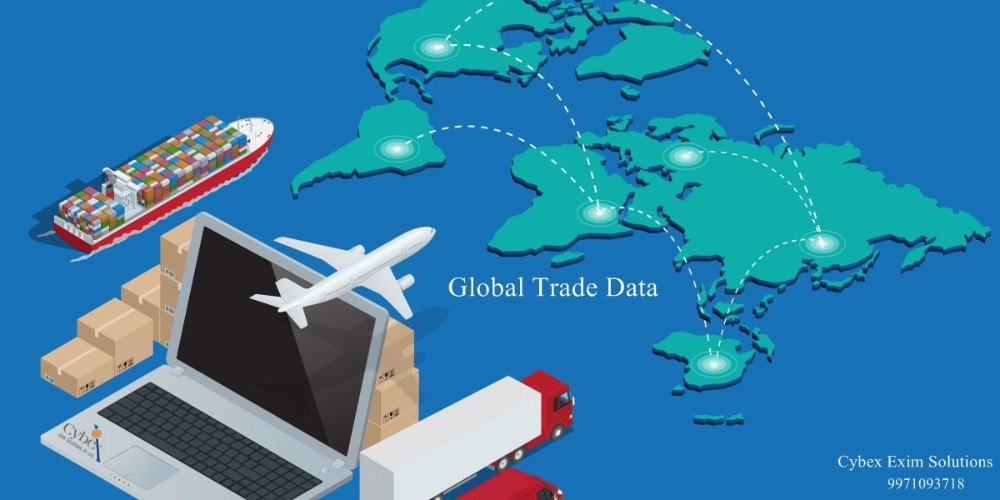
The most direct route to a list that passes all four tests above is transaction-level trade data. Every time a shipment clears customs, a record gets filed, either through a customs declaration or, in countries where this data is disclosed, a bill-of-lading manifest. Searching this data by HS code and destination country produces exactly what a directory cannot: a list of companies that have actually imported your product category recently, with shipment frequency and approximate order volume attached.
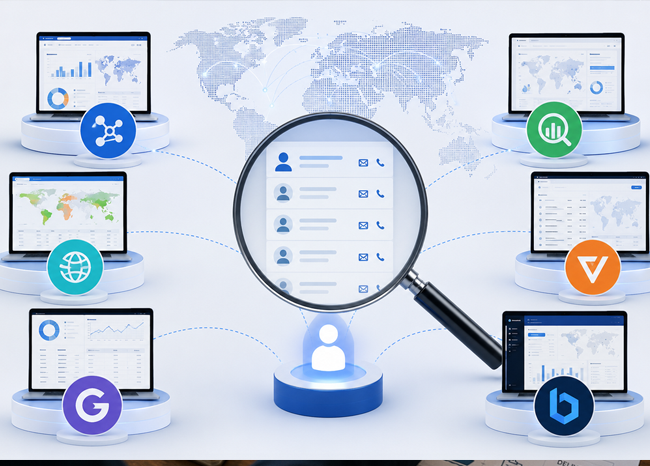
This is the layer where Bilvio’s buyer discovery tools fit directly into the process an exporter runs when trying to access a target-country customer list: rather than a static export sold once, a search returns companies with confirmed recent import activity, ranked by how often they order, alongside verified contact information for the relevant purchasing decision-maker. An exporter targeting frozen seafood buyers in Spain can pull up which Spanish companies cleared customs with that product category in the last two quarters, which is a fundamentally different starting point than a general food-importer directory scraped from public company registrations.
Method 2: Chambers of Commerce, Trade Missions, and Government Trade Bodies
Bilateral chambers of commerce (the Turkish-German Chamber of Commerce and Industry, for instance, or similar bodies pairing most major trading partners) maintain member directories and often provide matchmaking services connecting exporters with vetted buyers or distributors in a target country. National trade promotion agencies (Turkey’s Ministry of Trade programs, Germany’s GTAI, the UK’s Department for Business and Trade) run trade missions and matchmaking events that can produce a small, pre-screened list of interested buyers, often subsidized or free for SMEs.
The trade-off with this method is scale and speed. A chamber of commerce introduction or a government-organized matchmaking event typically connects an exporter with a handful of companies rather than a comprehensive list, and the timeline runs on the organization’s event calendar rather than the exporter’s. This method works best as a supplement for building relationships in a market, not as the primary way to generate a large target list quickly.
Method 3: Distributor and Agent Networks
A local distributor or agent, once secured, often has direct knowledge of who else in the target market is actively sourcing a similar product, and that relationship-based intelligence can surface names a data search would never catch, particularly in markets where import activity flows partly through informal or undocumented channels. This is especially relevant in markets with less transparent customs disclosure, where transaction-level data platforms have thinner coverage.
The risk is dependency and exclusivity. A distributor relationship secured before an exporter has independently confirmed the size and shape of demand in a market can hand over control of that market’s buyer relationships before the exporter has any way to verify whether the distributor is representing the full opportunity or only a slice of it convenient to their own interests.
Method 4: Marketplaces, Directories, and Purchased Contact Lists
B2B marketplaces (Alibaba, Global Sources) and directories (Kompass, Europages) allow an exporter to search for companies by industry and country, and some offer bulk export or lead-generation add-ons. Purchased contact lists, sold by data brokers and some directory platforms, promise a ready-made target list without the search effort. Both have a role, but neither should be mistaken for confirmed buying intelligence.
Directory listings are self-submitted and reflect that a company operates in an industry category, not that it currently imports your specific product. Purchased contact lists carry an additional risk beyond accuracy: they are frequently sold to multiple competing exporters simultaneously, meaning the companies on the list may already be receiving several near-identical cold outreach messages in the same quarter, which depresses response rates regardless of how well any individual message is written.
Is It Legal? Data Privacy Rules When Accessing Contact Lists
This question matters more than most exporters realize, particularly when the target market sits inside the EU. Business contact data, a purchasing manager’s name, work email, and job title at a company, is still personal data under GDPR, and using it for marketing outreach requires a valid legal basis. In practice, most B2B outreach relies on “legitimate interest” under Article 6(1)(f) of GDPR, which permits processing business contact data for direct marketing without prior explicit consent, provided the outreach is relevant to the recipient’s professional role, the processing is proportionate, and the recipient can easily object, according to compliance guidance published by Unify GTM’s B2B data compliance resource. This is not a loophole. It requires documenting a legitimate interest assessment, disclosing where the contact data came from, and honoring opt-out requests within 30 days.
This matters directly for how you evaluate a purchased list: a vendor who cannot explain where the contact data originated, or who cannot support a clear opt-out mechanism in your outreach, is creating real compliance exposure, not just a data quality risk. Sourcing contact information through transaction-level trade data, where the underlying justification for contacting the company is a documented, product-relevant import record, tends to produce a stronger, more defensible legitimate interest basis than a generic purchased list with no clear rationale for why that specific company was included.
How to Verify a Customer List Before You Use It
Whatever the source, a few checks separate a usable list from a wasted budget line. Check recency first: ask directly how current the underlying data is, and be skeptical of any vendor who cannot answer with a specific timeframe. Check specificity second: confirm the list reflects your exact HS code or product category, not a broader industry classification that happens to include your product as one of many. Check exclusivity third, since a list sold to multiple competing exporters in the same category will underperform regardless of its underlying accuracy, simply because the target companies are fielding redundant outreach.
Finally, spot-check a sample of the list manually before committing to full outreach: pick ten companies, confirm independently (through a company website, a LinkedIn search, or a direct customs record lookup) that they show signs of actually importing the relevant product, and treat a high failure rate on that sample as a signal to renegotiate or walk away from the purchase entirely.
Putting It Together: Building a Usable Target Country List
The most effective approach for most SME exporters combines methods rather than relying on a single source. Start with [target-market analysis](INTERNAL: Bilvio target market and buyer discovery) to confirm the country imports meaningful volume of your product category, then move to transaction-level buyer identification to build the core of the list, companies with confirmed recent import activity. Layer relationship-based sources, chamber of commerce introductions, distributor knowledge, trade mission contacts, on top to fill in gaps, particularly in markets where customs data disclosure is thinner.
Treat directories and purchased lists as a last resort or a supplementary channel rather than a primary source, and whatever the source, plan to refresh the list on a quarterly basis rather than treating a one-time export as a permanent asset, since import activity shifts within months and a list built two quarters ago has already lost a meaningful share of its accuracy.
Frequently Asked Questions
What is the most reliable way to access a customer list in a new export market?
Transaction-level customs and bill-of-lading data provides the most reliable foundation, since it confirms actual recent import activity rather than relying on self-submitted directory profiles or purchased contact exports of uncertain age and accuracy.
Is it legal to buy a customer contact list for cold email outreach?
It depends on the jurisdiction and how the outreach is conducted. In the EU, business contact data still falls under GDPR, and outreach generally needs to rely on a documented legitimate interest basis, with relevant messaging and a clear opt-out. A purchased list with no traceable data source creates real compliance risk regardless of its accuracy.
How current does a customer list need to be to be useful?
Ideally within the last two to three quarters. Import buying patterns shift within months, and a list built more than a year ago will likely include a meaningful share of companies that have changed suppliers, reduced volume, or stopped importing the category entirely.
Can a distributor give me a full customer list for their market?
A distributor can offer valuable relationship-based intelligence, particularly in markets with less transparent customs disclosure, but their knowledge typically reflects their own network rather than the full universe of active importers, so it should supplement, not replace, independent data-based research.
How do I know if a purchased customer list is actually accurate?
Spot-check a sample manually before committing to full outreach. Pick ten companies and independently confirm, through a company website, LinkedIn, or a direct customs lookup, that they show real signs of importing the relevant product category. A high failure rate on that sample is a strong signal to walk away.
Should I use one source for my target list or combine several?
Combining sources generally produces the strongest result. Use transaction-level trade data to confirm active importers, layer relationship-based sources like chambers of commerce or distributor knowledge to fill gaps, and treat purchased directory lists as a supplementary channel rather than a primary source.
Accessing a usable customer list in a target country comes down to recency and specificity more than volume. A shorter list of companies with confirmed, current import activity in your exact product category will consistently outperform a longer list of directory names with no evidence any of them are actually buying. Build from transaction-level data first, and let relationship-based channels fill in what the data alone cannot reach.